17 Reasons to Move to Reno, Nevada

While you are thinking of moving to the beautiful desert and mountainous state that is Nevada, take a look at what the city of Reno is all about. With Lake Tahoe just at its side, a colorful and glowing skyline, all four seasons, and a strong sense of community, Reno may just be the place to move to next.

1. Closest Metro City to Lake Tahoe

One of the most attractive aspects of Reno, Nevada is Lake Tahoe. This spectacle of nature is a close 40 minutes away from the metro area of Reno. It is also what makes this city stand out against others in the country. Lake Tahoe is immensely deep, even deeper than the Empire State Building is tall! The lake is 1,645 feet deep, compared to the height of the Empire State at 1,454 feet.

Lake Tahoe’s water has been tested to be 99.994% pure. This is cleaner than most commercial distilled water and gives the city of Reno access to clean water. It is as blue as it is purified, and the shallow edges of the water sparkle an inviting sea green. Lake Tahoe has a deep history to it, tied back to the Washoe Native Americans, the Pony Express, the Transcontinental Railroad, and even the deadly Donner Pass.

Lake Tahoe also comes with some clever nicknames throughout history. In 1844, it was first named Bonpland. These names changed from Mountian Lake, Maheon, Big Truckee Lake, and even Bigler in 1853. There was also an unsuccessful effort to rename the lake Tua Tulia. Finally, in 1862, Ta-hoe was the of the suggested names which is the anglicization of a Washoe term “da ow a ga”. This means big water or water in a high place. It was not until nearly 100 years later when the name was officially changed from Bigler to Lake Tahoe.

Lake Tahoe is a major part of Reno’s recreation scene. It is the perfect place for boating, camping, family reunions, or even a luxurious weekend out with a loved one. There are multiple state parks within Lake Tahoe’s area and areas to hike in the Sierra Nevada Mountains.

2. A Car Enthusiast’s Mecca

The car scene is quite strong in Reno. The people love their cars! Every August, Reno has their annual classic car show known as Hot August Nights. While the activities differ slightly every year, typical events include live music, Motorsport Auction Group (MAG) auctions, controlled drag races and burnouts, Big Boy’s toy store, Dazzling Diva boutique, diners, and drive-ins. This event is truly fun for the whole family.

But that’s not all. In fact, there is The National Automobile Museum which is considered one of the best of its kind in the entire world. This museum opened its doors in 1989 and has set the standard for automobile museums since. It is proudly on the list of the 10 Best Automobile Museums in the United States.

This museum was originally a car collection from Bill Harrah who passed away in 1979. This vast collection was then purchased by Holiday Inn in 1980. In their attempts to sell the vehicles soon after, the public was outraged. These plans quickly turned into a nonprofit museum and were the largest corporate philanthropic gift at the time. With a generous donation from the City of Reno Redevelopment Agency, the State of Nevada, and other car enthusiasts, the museum was fully opened on November 5, 1989, and still stands today.

3. Wá∙šiw Tribe Culture

Casino culture aside, Native American history plays a big part in Reno’s land. The Wá∙šiw people were here long before the pioneers tracked through Reno. Their reservation is set just outside of the city of Reno and in the Lake Tahoe area. However, their culture plays a part in living in Reno, Nevada through outdoor recreation and protection.

The Wá∙šiw people, otherwise known as the Washoe tribe, have a strong sense of family. In the past, each member of the tribe had a different occupation depending on which part of their territory they came from. This tribe was split into 4 different bands, with subtle cultural differences and language patterns in each one. The Washoe’s summers were spent fishing for cutthroat trout and hunting game. Plant medicine was and still is actively practiced.

The fall was meant for hunting for winter, specifically tracking for rabbits. In the winter, the Washoe tribe would travel to the lowland valleys of the Sierra Mountains to bear through the harsh blizzards. As spring made its way back to the tribe, the people would travel upwards once more for hunting.

During the California gold and Nevada silver rush, immigrants and minors flooded into the area. They took over the Wá∙šiw lands, hurting their economy, culture, and living patterns. The logging industry snuffed forests, and a once bountiful area had become bleak. Today, the Washoe tribe stands strong as they rebuild their culture and infrastructure. It is now illegal to excavate, remove, deface, damage, alter or desecrate resources on Washoe Tribal lands. Again, the Washoe tribe sits just outside of Reno and has a highly developed culture. This is something you will see and appreciate as Reno locals.

4. The 2nd City With The Most Casinos

Reno has over 20 casinos to choose from and has the 2nd most casinos in the country, right behind Las Vegas which has 31 casinos. Reno is known as the best destination for those who love the sport of gambling but want a simpler environment to be in. Because of this, Reno is seen as the smaller and more relaxed version of Las Vegas.

As other states began to allow casinos, gambling was not Reno’s best source of income. Instead, Reno began to rebrand itself as an outdoor adventure destination, giving the nature surrounding Reno its due credit. This has given Reno the financial stability for new hotels and better restaurants. This goes to show that Reno is much more than a gambling gimmick, but a beautiful and well-thought-out city.

5. The Biggest Little City in the World’s History

One reason to make the move to Reno, Nevada is the rich history behind the city itself, as well as the opportunities it offers.

Every city has its own nickname, usually based on gilded age sayings or cultural affiliations. At the turn of the 20th century, smaller towns wanted similar action and financial gain as the bigger cities were getting. Many cities affectionately claimed the term “The Biggest Little City in the World“, such as Wichita, Memphis, Sioux Falls-South Dakota, and most notably, Reno, to gain tourists. This phrase reflected the city’s attitude, that while their population or structures are small, the people’s vision, opportunities, and pride are big. The nickname stuck, and Reno kept the nickname over the other before-mentioned cities.

In 1901 when this nickname was popular, the city had a population of 10,000 people. As of 2020, Reno has a population of close to 251,000 residents! This city may not be so little anymore, but culturally, the name stays as well as the town’s pride and opportunities.

6. Reno Has Lower Taxes

The state of Nevada has no individual income tax as well as a corporate income tax. There is a gross receipts tax and the state has a 6.85 percent state sales tax and together there is a local sales tax of 1.53 percent. In Reno, the sales tax rate is 0% and the county has a sales tax rate of 3.67%. Nevada is the 7th best state for tax systems in the country in the year 2022.

While this may not be the sole reason, it is a great benefit for those who make the move to Reno, Nevada!

7. There Is A Strong Nightlife

There is a strong nightlife in Reno, but it differs from Las Vegas. While Las Vegas is about escaping the world into a night of shows, gambling, and fantasy, Reno is about enjoying the world we are in by meeting others, spending time outdoors, and enjoying great food and music. As mentioned before, gambling is a good part of Reno’s economy and casinos correlate to a strong nightlife, especially here in Nevada. Outside of casinos, there are places such as the Mountian Music Parlor, Bluebird Nightclub, The Eddy Bar, and of course, Bundox Bocce, an outdoor recreation area.

8. Reno Has All Four Seasons

Just because Reno is in a desert state, its location has the ability for all four seasons! Its trees show the change of color in the fall, its mountains hold the snow in the winter, flowers bloom in the spring, and the sun beats down in the summer. Over the course of the year, temperatures vary from 23 degrees Fahrenheit to 90 degrees Fahrenheit. Cloud concentration varies throughout the seasons, with the clearest months in June to October. The rain varies as well, with a wet season from October to April. Snow season goes from November to March, with snowfall f at least 1 inch.

9. University of Nevada – Reno

The Unversity of Nevada – Reno is the number 1 college in Nevada, with popular majors such as nutrition, psychology, business, nursing, and mechanical engineering. Most students are located on campus and have a graduation rate of 60%. It is rated as a top National University by the U.S. News & World Report. There is a strong sense of pride coming from the University of Nevada – Reno and a strong athletics team.

10. Local Sports games

Speaking of athletics, games are an important part of life here in Reno, Nevada. Whether it be high school football, the Reno Aces baseball games, or the Nevada Wolf Pack’s basketball, sports are a major part of the local culture. There are other sports in town as well, such as ballet or arts such as the opera and museums. All these activities are a way for families to spend some quality time together and most importantly, connect.

11. Known For Hunting

Reno, Nevada is a beautiful place to go hunting, specifically for the Rocky Mountain elk, mule deer, bighorn sheep, or mountain lions. In the state of Nevada, there are 48 million acres of public land, and a whopping 86% of the state’s land is federally owned, and most of it is for hunting. In Nevada, a hunting license is required for elk, mule deer, black bear,s pronghorn antelope, rocky mountain goats, and bighorn sheep.
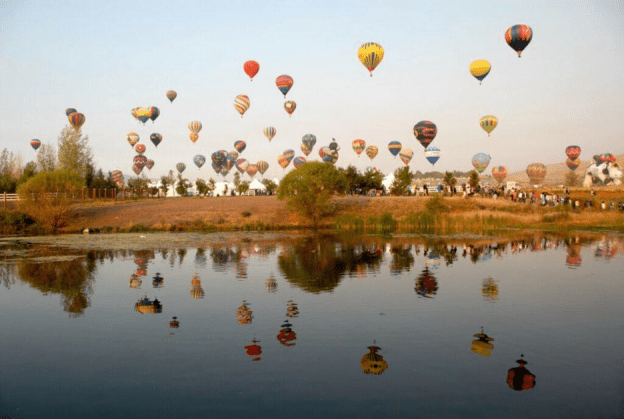
12. Strong Sense of Community

Nevada is mostly uninhabited land. Because Las Vegas is completely across the state, Reno really is the only other major city in Nevada, save it some other cities near Vegas and Reno. Because there is so much empty space, the large cities that are there have such a strong community, Reno included.

14. Near The Border of California

For those who are from or have family in California, you’re in luck! Sacramento is the closest large city near Reno and it is only a 2 hour and 10 minute drive away. In between this drive, you will see a plethora of national wonders, such as the Tahoe National Forest.

15. Not Too Far to Oregon

While others love that California feeling, others resonate more or are even from Oregon. Reno is also a good driving distance from Oregon, with the closest Orgonean city being Lakeview, Oregon. This city is pretty quiet with a population of nearly 3,000 residents. Medford is a little over 5 hours away, and the metropolis of Portland is 8 hours away.

16. World Renowned Ski Resorts

Because of the nearby Lake Tahoe, Reno is close to some pretty spectacular skiing destinations. These destinations include Soda Springs, Kirkwood Mountain Resort, Donner Ski Ranch, Sierra-At-Tahoe, M.t Rose Ski Tahoe, and Boreal.

17. The Nevada Museum of Art

Reno, Nevada has a thriving art scene with art murals in the city. The most popular of these is the Nevada Museum of Art, which has a thriving Youtube Channel, workshops for adults and children, visiting speakers, and most excitingly, A new Education and Research Center addition to the museum opening in 2025.

13 Best Family Neighborhoods in Anchorage, Alaska

Website Link

You’ve decided to make the major move to Alaska, and you want to be sure that you’re in the best neighborhood possible so that your family can feel at home. What are the best family neighborhoods in or near Anchorage, Alaska?

1. Eagle River

Just outside of downtown Anchorage, Eagle River is hands down the best family community in the Anchorage area of Alaska. I have relatives from Eagle River, and great personal experiences there, to prove that Eagle River is full of outdoor adventure and a strong family community. Eagle River also has surprisingly delicious restaurants! There are 28,000 residents, most of which are families. There is a good religious and nonreligious community alike, great public schooling, and a beautiful Alaskan landscape.

There is the Eagle River Nature Center, which is an easy 3-mile nature walk or a 5-mile hike for a view of waterfalls and 3,000-foot cliffs! This is the best place for a family hike, especially if you have young children and need an easy way to enjoy the Alaskan mountains. There are also two popular lakes in Eagle River known as Eagle Lake and Symphony Lake. It is quite rare to find lakes just within feet of each other. This 1-mile hike is another great nearby amenity.

The housing in Eagle River is also really nice! While you can find nice homes in any pocket of Alaska, Eagle River is one of those places where most, if not all, houses are pretty nice. The neighborhoods are also very safe, especially for young families. The median price for homes in Eagle River, Alaska starts at 400,000. This is lower than the national average of $428,700 in 2022. With home prices increasing by 30% since the pandemic, houses in Alaska have stayed relatively low. In Alaska specifically, the typical home value sits at $337,373. Eagle River is definitely one of the best places to live for young children, with hiking, kayaking, and Alaskan adventures just being minutes away from home.

2. Girdwood

Girdwood is a good 45 minutes away from Anchorage but is the cutest little town filled with festivals and outdoor activities. Known for its world-renowned skiing resort known as Alyeska Resort, Girdwood can be considered a “hippie town” by some of the locals in Anchorage. Because of this, many families will rent out condos in Girdwood for a weekend skiing in the winter, or even a summer getaway full of hiking. There are many family-friendly condos available, so even if families are not looking to move to Girdwood specifically, having a condo in Girdwood can be a key characteristic of an Anchorage, Alaska local.

Apartments in Girdwood are currently at 1,600 per month while there is a median home price of 560,000 dollars. Living in Girdwood is 4% lower than the Anchorage average, yet 22% higher than the national average. Keep in mind that there is no sales tax in Alaska.

3. South Addition

The South Addition of Anchorage, Alaska is the best-ranked neighborhood on niche.com with an overall “A” score, and it is also a personal favorite to visit. This neighborhood has a population of nearly 4,500 residents and most own their own homes. South Addition has a plethora of bars, restaurants, parks, work opportunities, and not to mention, fantastic coffee shops. The median rent for the South Addition is $1,409 per month and there is a median home value of $475,889. This neighborhood is not only very safe, but the residents also have an average higher income of $120,774 per year. The public schools are also highly ranked, making this a great place for young families looking for an Alaskan adventure.

4. Rogers Park

Rogers Park is another neighborhood located snugly in little Anchorage. It has a population of just over 4,100 residents and above-average parks and yards! It is a very dog and animal-friendly neighborhood. Alaskans are known to be very friendly and willing to help or reach out to their neighbors. Locals review that nature is right at their doorstep in Rogers Park and they love the social, environmental, and academic opportunities in this neighborhood.

5. Downtown Anchorage

Downtown Anchorage has a wide variety of real estate, from large homes to affordable condos. One of the best things about Downtown Anchorage is the waterfront views of the Knik Arm. Locals love to fish in this area, where fish species such as Chinook salmon, coho salmon, and sockeye salmon can be caught. The average rent for Downtown Anchorage is just about $1,200 per month, which is a 4% decrease from the previous year. Downtown Anchorage is a great place to look if you are wanting a more urban lifestyle.

6. Rabbit Creek

Rabbit Creek is home to larger pieces of land and higher median home values that sit around 600,000. It has a population of just over 6,000 residents and most people own their own homes. Their public school systems are also highly rated. Most residents have some sort of college education and have a median household income of close to $170,00 per year. That is just about $100,000 more than the national average! Needless to say, Rabbit Creek is a great place to look into if you are wanting to build your perfect family home.

7. Turnagain

This neighborhood is located in west Anchorage and has some of the best public schools in the area. There is easy access to outdoor recreation, including but not limited to national parks, paddleboarding, and hiking trails. Turnagain is also quite close to the Ted Stevens Anchorage International Airport, which is great for families who need to travel to the mainland often. Turnagain is a perfect neighborhood to look into for younger families that are making the first move to Alaska!

8. Portage Valley

Just an hour outside of Anchorage, Portage Valley is a great place to settle for those who prefer a more rustic lifestyle. The population sits at just 200 and is past Girdwood, on the way to Whittier. Portage Valley sits right next to the beautiful Seward Highway. For those who need more city resources, there are other neighborhoods to look into, but it is an important location to mention for those who know their trades well.

9. Huffman-O’Malley

This Anchorage neighborhood has low crime rates and nearby many public schools, making Huffman-O’Malley a great Alaska family neighborhood. There is a population of just over 10,000 residents and a median home value of $428,000. 90% of residents own their own homes, and rightfully so! Huffman-O’Malley is a predominately family neighborhood, young and old. There is an oil company located in Huffman-O’Malley, giving the locals great job opportunities. There are also plenty of local businesses here in this town, from restaurants, to construction, or to engineering.

10. Spenard

Spenard has a population of close to 12,000 residents! It is located just within Anchorage and borders the Ted Stevens Anchorage International Airport and has a higher home median value compared to other Alaskan neighborhoods at $246,300. Spenard is considered to be a very family-friendly neighborhood where residents aren’t afraid to say hello to each other. Spenard is a great place for those who need to commute daily and there are nearby quality schools for the kids still living at home!

11. Sand Lake

Sand Lake is another quiet neighborhood nestled next to Alaska’s most popular international airport. It is considered safe, green, beautiful, quiet, and a good place to raise children. Sand Lake has a population of just over 23,000 people and is one of the best places to live in Anchorage, Alaska! There are plenty of restaurants, coffee shops, and highly rated public schools. This neighborhood is another good choice to look at for those who are needing a daily commute in the city of Anchorage.

12. North Star

North Star is a smaller neighborhood in Anchorage, Alaska, that is best suited for a little family. The rent is cheaper here with a median apartment rent of under $1,000 per month and a median household income of $66,035. Young families have reported that while Alaska is a much more remote lifestyle compared to the rest of the states, North Star is one of the better Alaskan neighborhoods, giving variety and opportunities to everyone. There are few popular stores in town, but there are plenty of mom-and-pop stores that offer a unique selection compared to chain stores. If this is a lifestyle you are looking for, check out North Star!

13. Bear Valley

Bear Valley is a very quiet neighborhood of just shy of 400 residents! GreatSchools rated Bear Valley Elementary School a 9/10 with parent reviews at 4 out of 5 stars. It is on the list of best family neighborhoods in Anchorage, and most residents have some degree of a college education. Just like Portage Valley, bear Valley is a better location for those who know their trades well and are suited for that quiet, wilderness version of an Alaskan lifestyle.

Is Queen Creek, Arizona a Conservative City?

Website Link

Queen Creek is one of the fastest-growing cities in the state of Arizona. Circled beneath the SanTan mountains, what is this little town all about? Is this city liberal or conservative, and what kind of family fits best in this desert location?

Queen Creek, Arizona is a conservative city in Maricopa County, as the residents have a history of voting for Republican candidates. In 2022, Maricopa county was offered to be divided into four sections. Jake Hoffman, a Queen Creek Republican, sponsored the bill to give Republicans a stronger voice.

Continue reading below to understand more of Queen Creek’s political makeup and what kind of families you will meet here!

An Agriculture Community

Queen Creek is known for being a little bit “redneck” so to speak. There are sections of the city that are being built into classic, cookie-cutter suburbs, but originally, this was a farming community. You will find either growing suburbian families that are most likely members of the Church of Jesus Christ of Latter-day Saints or farmers that have been in this area for years.

The town is young and while a community was formed in 1912, Queen Creek was not officially established until September of 1989. Since its founding, church, community, and patriotism continue to be extremely important to Queen Creek residents, which are trademarks of a conservative community. Back in the day, this area was known as Rittenhouse because of the nearby railroad. Today, this city is called Queen Creek because of a nearby mine named Silver Queen.

Maricopa County

Maricopa County, where Queen Creek resides, leans liberal based on the 2020 presidential election. Arizona has been considered a swing state in many previous presidential elections, so while Maricopa has consistently voted Republican since 1952, this would make 2020 the first year Maricopa county has voted democratic in over 50 years.

Because of the 2020 election, Republican residents in Maricopa county felt that there may have been foul play in the votes. Residents have felt that their voice is getting weaker, and to fix this, Jake Hoffman, who is from Queen Creek, sponsored a bill to divide Maricopa into four different counties named O’odham, Mogollon, Maricopa, and Hohokam respectively. This would give residents in different areas a stronger voice. His thought process was that Democratic Pheonix can voice a liberal opinion and conservative Gilbert and Queen Creek can voice a Republican opinion.

Maricopa County has a big population of 4.4 million citizens and two-thirds of Arizona’s population lives in Maricopa county. Jake Hoffman wants to even the political playing field, but other Republicans disagree with his idea. Paul Boyer, and Republican Arizona state senator, believes that while Maricopa county is big, it’s still run efficiently. Hoffman’s idea increases government control, which is a concept that is a threat to conservative ideals. Additionally, new counties mean new governments, city buildings, and so on. This caused Boyer some concern.

In 2022, this bill, known as House Bill 2787, has stalled but is predicted to pick up pace around the 2024 presidential election.

Republican Ties

In January of 2022, Donald Trump hosted a rally in Florence, Arizona, a city that is close to Queen Creek. Thousands of voters and Trump-loyal residents turned up. Based on recent elections and sanctions for conservative rallies, Queen Creek is republican.

Religion is very important to Arizona residents. In Maricopa county, approximately 500,000 residents are Catholic, with members of the Church of Jesus Christ of Latter-day Saints (Mormons) coming second with nearly 250,000 residents being members. Latter-day Saints tend to be more actively involved in politics than Catholics, so Arizona has a huge Latter-day Saint influence. It’s safe to say that Queen Creek is a Mormon town, and Mormons are mostly conservative voters. Queen Creek also has an official Republican party Facebook page.

Growing Suburbs

Why is Arizona growing so quickly? It’s because cities such as Gilbert and Queen Creek are considered family-friendly towns. Queen Creek is an extremely clean city with charter schools available, church buildings close by, and a plethora of grocery stores available.

This city has the third highest median income in Maricopa County at approximately $105,00 per year. Queen Creek is also a very well-educated population with about 80% of residents over the age of 25 having college experience or an advanced degree. The average household size is 3.49 children and the median age is 34.1 years old. Queen Creek has the youngest median age in the East Valley.

Change in Mayors

Mayors in Queen Creek have not been politically affiliated, but they focus heavily on the infrastructure issues in Queen Creek.

Gail Barney was Queen Creek’s previous mayor and was elected in June of 2010, but has served in Queen Creek’s government since 1998. However, in June of 2022, and 12 years of service, Gail Barney passed away at age 74. Barney intended Queen Creek to be neighborly and welcoming and focused on the town’s biggest challenge, which he considered was ensuring enough resources for infrastructure.

The only candidate and next viable mayor is Julia Wheatley. Her term is expected to begin in 2023. Wheatley was elected to the town council also in June of 2010 and was reelected in 2014 and 2018. Wheatley has a Bachelor of Science in Legal Studies and is pursuing a master’s in politics.

What Political Issues Does Queen Creek Face?

According to Julia Wheatley, one of the biggest issues Queen Creek faces is adapting to a growing population while still creating a close-knit community, building parks, water supply, public safety, roadway improvements, and agriculture.

Wheatley wants to improve the roads in Queen Creek to reduce driving congestion and commute time for work. Wheatley also wants to secure Queen Creek’s water rights for farmers. There is currently a 100-year water supply for current and future residents, but lowering the cost of water is a big issue.

While the priorities have been on public safety, roads, and sustainable water supply, parks have been neglected. This has been an issue for young families, so Wheatley is focused on creating new recreational areas and amenities.

While Queen Creek’s local government is focused on improving daily life, the main issues are aligned with a Republican mindset, as it is focusing on business, family, and community. Wheatley wants to make sure Queen Creek is a safe space for new businesses, which is a concern for Queen Creek’s Republican families.

Demographics of Queen Creek

Now that we understand what kind of issues Queen Creek faces and what the political stances are, looking at its demographics can help us understand what kind of people we will meet in this small city.

In Queen Creek, the most prominent race in the city is White, as they make up 84.95% of the population. 6.66% of the population is of two or more races. Those of Hispanic descent make up the second-highest percentage of the population. This is likely because of how close Arizona is to Mexico, as many people cross the America-Mexico border into Arizona.

Luckily, Arizona’s food and architecture reflect a Latino heritage, so you can get really good Mexican food in Queen Creek.

The poverty rate is 5.20% and more females are in poverty than men by nearly 2%. The most likely race to be in poverty is indigenous Americans, with 20.26% of Native American residents falling below the poverty line. However, the race least likely to be in poverty is Hispanic.

There are more females than males in Queen Creek, with 51.87% being female and 48.13% being male. Most homeowners in Queen Creek are married. 24.28% of residents have a bachelor’s degree, but 25.73% have some college education, which adds up to include most of the population. High school graduates follow just behind at 22.10%.

Personal Experience

From my personal experience, Queen Creek is a lovely place to live. There are plenty of places to eat, shop, and great people to meet. The homes are nice and the scenery is one of a kind. The community is very close-knit, and most of the people I have met in this city are members of the Church of Jesus Christ of Latter-day Saints.

The food here is so good and you can get an authentic Hispanic food experience at many restaurants. There are more amenities in Gilbert, such as parks, but it is not far away. Queen Creek is nice because it’s a smaller town than Gilbert, so while you’re still close to the action, you can get some peace and quiet in your home at Queen Creek. It is rapidly growing because of all the land that is available compared to Gilbert or Mesa, but you can meet some wonderful people here.

Even if you are Democratic on the political scale, the people in Queen Creek are still kind. Be aware of a definite right bias but Queen Creek is not a politically tumultuous town and is accepting of others who are different.

Queen Creek, Arizona is a conservative city and has been for a long time. It is not expected for the residents to start leaning liberal in the near future.