Letter from the editor: 50 years of Scroll

This article was written for BYU-I’s news organization, Scroll.


Did you know that this is the 50th year that our school news organization, Scroll, goes by the name of Scroll?

In 50 years, and over 100 years of local history, Scroll has gone by many titles: Viking FlashesThe Student Rays and The Purple Flash, to name a few. In all these years, all the changes in management, the different styles of editors-in-chief and the stories that affect Rexburg, Scroll remains the same in one fundamental aspect — it’s a platform for writers to learn and grow.

When I came to BYU-Idaho, I felt smaller and quieter than I ever had in my life. I knew that my Father in Heaven loved who I was, but I didn’t believe it. I only knew myself as a girl capable of failure.

Now, despite the challenges I have hidden in the personal corners of my life, I feel larger than life. I feel confident in myself as a leader, a friend, a wife. Having the opportunity as editor-in-chief of Scroll gave me the tangible experience necessary that has verified something: I can accomplish whatever I set my mind to. Now as I embark on my professional career, I know I can handle whatever comes my way.

Trust me, I am terrified and excited to embark in the world outside of college. But, I pray that as Scroll continues to grow, those who take the practicum or work on staff can have a similar experiences. I want them to know they are loved, valued and needed, and that whatever their past, whatever their struggles, there is a place for them at Scroll. Writer or not, creative or not, Scroll is a place to learn and feel included.

In my work as editor-in-chief, the staff and I brought back a printed edition of Scroll, which covered the inauguration of President Meredith. We successfully covered the October 2023 session of general conference. We created a documentary that covered the work of Idaho National Laboratory. We reignited the Journalism Society on campus. We rebuilt our website and reworked our style guide. We dusted, organized and decorated the Scroll office in the back of Spori 114.

The only reason we were able to do all this is through the help of our wonderful faculty, students and staff. So, as the semester rolls to a close and my time as a college student ends, I can only think of one thing to say to those who work with Scroll.

Thank you.

Idaho National Laboratory

This project was completed for BYU-I’s news organization, Scroll. This documentary won an Idaho Press Club award.


During the 2023 Fall Semester, Scroll visited Idaho National Laboratory to understand how their projects impact Idaho and the nation.

As Editor in Chief, I organized, edited, took photos and published all content for this project. This video is the result of the students’ visits and collaboration with Soapbox, BYU-Idaho’s creative agency. This video is a student’s interpretation and might not reflect exactly all the work done at INL.

Documentary

Articles in the series ‘Idaho and the Energy Future’

Behind-the-scenes photos

The documentary team behind Idaho and the Energy Future film content next to an Electrolysis machine.
The documentary team behind Idaho and the Energy Future film content next to an electrolysis machine. Photo credit: Isabelle Justice

Soapbox employees, BYU-I's creative agency, film content for the Idaho and the Energy Future Documentary.
Employees from BYU-I’s creative agency film content for the Idaho and the Energy Future documentary. Photo credit: Isabelle Justice

Scroll reporter, Katia Brown, taking notes while interviewing Benny Varghese, an EV research engineer at INL.
Scroll reporter, Katia Brown, taking notes while interviewing Benny Varghese, an EV research engineer at INL. Photo credit: Isabelle Justice

Video Journalism

I created a video summarizing the special project we created for Idaho National Laboratory for a Video Journalism course.

Voices of conference: Bagpipes on the corner

This article was written for BYU-I’s news organization, Scroll.


On the corner of the Conference Center in Salt Lake City, a man in a kilt plays hymns on his bagpipes.

“I’m happy to do it — it’s a workout,” said Tim Fowers, a member of The Church of Jesus Christ of Latter-day Saints from Centerville, Utah. “About 20 hymns I can do, I know nine notes on the bagpipes so I have to kind of pick.”

Fowers began playing for neighbors in 2020 when COVID-19 hit Utah.

“I started going out and playing (the bagpipes) in the community,” Fowers said. “I would post on (a city’s) Facebook and say, ‘Hey, I’m in the neighborhood playing,’ because we were all stuck. So every week, every Sunday, I would get out and play.”

Scroll's Editor in Chief interviews Tim Fowers, a Utah local that plays hymns on the bagpipes.
Isabelle Justice, Scroll’s Editor in Chief, speaks to Fowers on the corner of the conference center.

Once in-person conference began again in 2022, Fowers played hymns at the corner of the Conference Center, right next to where protestors shout their message.

“I’m not trying to make money, I’m not trying to sell DVDs,” Fowers said. “I’m just playing for people. This is a great audience.”

According to Fowers, the best part of playing the bagpipes is the connection he feels in Salt Lake City.

“We just had a whole bunch of people packed in here and they started singing,” said Fowers. “That meant a lot.”

Meredith Newspaper

In the Aug. of 2023, the Scroll summer staff created the first magazine for the student news publication since 2019. I wrote three of the articles, edited each one individually to follow AP style and took photographs. The magazine was designed by my coworker, Hannah Daley, and I assisted the design process.

In Oct. of 2023, the Scroll fall staff successfully distributed and marketed this new magazine. We had newspaper racks in 9 different buildings across campus and distributed them by hand at the inauguration of President Alvin F. Meredith III.

In Sept. of 2023, I personally interviewed President and Sister Meredith as an exclusive addition to our magazine. That interview can be seen here.

I wrote 3 articles for the Meet President Meredith publication, which are linked below:

Who is the new president of BYU-I?

How is the president of BYU-I chosen?

What changes are coming to BYU-I? Here’s what students think

Meet President Meredith

Exclusive interview: Merediths call BYU-I ‘famously friendly’

This article was written for BYU-I’s news organization, Scroll.


On Sept. 6, Isabelle Justice met with President Alvin F. Meredith III and Jennifer Edgin Meredith to discuss the couple’s hopes as the new leaders of BYU-Idaho.

“We know that (BYU-I students) can become disciples (of Jesus Christ) and become experts and scholars in their fields,” said President Meredith. “I am really grateful for that vision of BYU-I — a vision that we are inheriting.

On May 16, President Meredith was announced as BYU-Idaho’s 18th president, succeeding Henry J. Eyring who served for six years. His inauguration is on Oct. 10 in the BYU-Idaho Center.

“It’s just very humbling,” said Sister Meredith. “We know that this stewardship is a very sacred responsibility.”

President and Sister Meredith in an interview with Scroll.
The Merediths in an interview with Scroll. Photo credit: BYU-Idaho

The Merediths began their stewardship at BYU-I in the summer and are connecting with the Rexburg community.

“BYU-Idaho is famously friendly,” said President Meredith. “That’s the phrase that we’ve heard and we have felt that. You know, we’re from Tennessee and so we know southern hospitality when we see it. We just didn’t expect to see it in Southern Idaho.”

President and Sister Meredith have six children — four boys and two girls — and each served a full-time mission for The Church of Jesus Christ of Latter-day Saints. President Meredith is continuing to serve as a General Authority Seventy while president of BYU-I.

“(Our children) are excited to be here,” President Meredith explained. “When they learned of this assignment, they changed the name of our family group chat from ‘Meredith Family’ to ‘Tater Tots.’”

The exclusive interview can be viewed below.

Who is the new president of BYU-I?

This article was written for BYU-I’s news organization, Scroll.


On May 16, Alvin F. Meredith III was announced as BYU-Idaho’s 18th president, succeeding Henry J. Eyring who served as president for six years. The announcement was made during Devotional by Elder D. Todd Christofferson of the Quorum of the Twelve Apostles.

President Meredith has served in many different Church capacities; he’s been the chairman of the Executive Committee of BYU-Idaho’s Board of Trustees, a General Authority Seventy, president of the Utah Salt Lake City South Mission, a bishop, stake president and Area Seventy in the North America Southeast and Asia Areas.

With his church service aside, who is Alvin F. Meredith III, the new president of BYU-I?

From the Bible Belt

Known as “Trip” by friends and family, President Meredith was born in Chattanooga, Tennessee, on July 22, 1970. His mother, Mary Smartt Meredith, was a convert to the church, according to a Church Newsroom interview.

“We come from good stock, just not pioneer stock,” President Meredith said. “There were no handcarts in our family history, no crossing the Plains.”

President Meredith was an athlete in high school and served full-time in the Utah Salt Lake City mission after graduation.

Studied psychology and business

After his mission, President Meredith earned a bachelor’s degree in psychology at BYU in 1994. He later earned a master of business administration in finance from the University of Chicago in 2001. He met his wife, Jennifer Denise Edgin, during his time in Provo.

“We were set up on a blind date by some mutual friends,” President Meredith said in a BYU-I Devotional. “My wife is the very best person that I know … Over time, the accumulation of small and quiet reassurances made me realize that she was someone that made me think my highest thoughts, aspire to my noblest deeds and made me wish that I was better than I was. And I just really loved her too.”

They were sealed on Feb. 8, 1998, in the Salt Lake Temple. They have been married for 26 years and have six children.

Sister Meredith’s parents are converts to the Church. She served a full-time mission in the Argentina Salta Mission and earned a bachelor’s degree in communication from BYU.

President Meredith has served in many different Church capacities and began his service at BYU-I on Aug. 1.

Lived and served overseas

After graduate school, President Meredith’s job offered a position in Hong Kong, China.

“At the time, our oldest child was ten years old and my wife, Jennifer, was six months pregnant with our sixth child,” President Meredith explained. “It was daunting to know that this decision would affect not only me, (but) the people I love the most — my family.”

President Meredith prayed, studied and counseled with Church leaders to make a decision.

“It became clear that this would be a good move — not an easy move — but a good move for our family,” President Meredith said.

The Merediths lived in Hong Kong from 2010-2011, and upon returning to the U.S., President Meredith was sustained as an Area Seventy in the North American Southeast Area from 2012-2016.

The Merediths returned to Asia once more for work in 2016, and President Meredith was sustained as an Area Seventy in the Asia Area where he served until 2018.

In the last decade, President Meredith completed Church assignments in Utah, Tennessee, Arkansas, Alabama and North Carolina. In Asia, he served in Singapore, Malaysia, Indonesia, Hong Kong, Pakistan, China, Thailand and India.

Mission president and General Authority Seventy

President Meredith was later called as the mission president for a place that he knew well — Salt Lake City, Utah.

“We’ve learned that wherever you go, it’s the Lord’s work and it’s the Lord’s Church regardless of the language or culture they come from,” President Meredith said in a Church Newsroom interview.

After his service as a mission president, President Meredith was sustained as a General Authority Seventy in 2021. He will continue to serve as a General Authority during his time at BYU-I.

When is the inauguration?

Meredith began his duties as president on Aug. 1. His first act as president was leading the first devotional of the summer.

“It’s my first day of school,” President Meredith said to a chuckling crowd, according to a BYU-I Scroll article.

President Meredith’s inauguration is on Oct. 10 at 11:30 a.m. in the BYU-Idaho Center. The event will be available onlineBYU-I Radio and YouTube.

“The university invites students, employees and the public to gather to celebrate this milestone in BYU-Idaho history,” said Brett Crandall in a BYU-I news release.

BYU-I student serves Lahaina families

This article was written for BYU-I’s news organization, Scroll.


Ember Anderson, a BYU-Idaho student, shared that if she were to go back to Front Street in Lahaina and imagined that it could ever be burned down, she wouldn’t have believed it.

On Aug. 8, a wildfire on the island of Maui devastated the historic town of Lahaina. Over 100 people were killed, including five Latter-day Saints. Nearly 3,000 structures were damaged or destroyed in the fire.

On Monday, Maui police confirmed 114 fatalities and identified 27 individuals. There are three active fires in Maui: the Olinda, Kula and Lahaina fires. They are 85% or more contained. The Pulehu/Kihei fire was 100% contained on Aug. 12.

Ember Anderson

Anderson was born and raised on Maui and was interviewed by BYU-Idaho Radio Tuesday.

“I was going to Lahaina early in the morning to work with my dad at one of the resorts,” Anderson said. “We were driving down and I looked up the mountain, and I saw the fire upcountry.”

Anderson mentioned that fires in Maui are typical, but this fire was unique due to a hurricane passing south of the island.

“(The hurricane) created this gnarly sucking action. At the resorts all the power was off … It was just super windy all day. You could smell the smoke,” Anderson said. “None of the sirens ever went off … which they test every month, but they never went off for some unknown reason.”

Anderson and her father left Lahaina due to the strong winds — two hours later it was nearly impossible to leave Lahaina.

“We were stuck in traffic because they closed one of the roads,” Anderson said. “You could see the telephones bending and swaying toward the cars.”

Anderson made it home safely. Her house in Makawao was untouched by the flames, but she could see the smoke from where she lived.

“We were all sitting together watching the fire progress through social media,” Anderson recalled. “We had some friends in Lahaina. It was really scary.”

Latter-day Saint relief efforts

Anderson, like other Latter-day Saints in Maui, helps in relief efforts for locals.

“Me and my family have two stake centers in town, Kahului, that we’ve been volunteering at,” Anderson said. “We’ve been doing clothing, food, just kind of everything like that.”

On Saturday, Church Newsroom highlighted the stories of Latter-day Saints through a news article and video. Eighty members of the Lahaina 1st Ward lost their homes and many members of the Lahaina 2nd Ward were displaced, but the two meetinghouses in Lahaina did not burn.

“Those coming to the stake centers for help seemed shocked,” said Anderson. “They are trying to process what just happened. Many of them, their entire lives are just decimated. For a lot of the people that live over there, those homes are just ancestral.”

On Friday, Hawaii Lieutenant Governor Sylvia Luke toured two Maui stake centers which were used as temporary shelters.

“We are just so grateful for the outpouring of support; this shows what people are made of,” said Governor Luke. “In a time of crisis, in a time of devastation, it’s people, it’s community, it’s the Church that steps up.”

Anderson and other Maui locals have worked together to provide relief.

“Not a lot of the government has gotten involved,” said Anderson. “The community has really pulled together and there are so many boats and jet skis that just keep going over to Lahaina. You can’t really access it right now by car, so they are taking food, clothes, shelter, propane, gas and just everything they need.”

On Sunday, The Church of Jesus Christ of Latter-day Saints announced they will donate $1 million to the American Red Cross, which will provide shelter, meals, bedding, hygiene kids, mental health services and more, according to a news release. The Kahului Hawaii Stake Center shelter was also dismantled, as people found other living spaces.

How to help Maui

But the best way for Maui to heal, according to Anderson, is for tourists not to visit the island.

“There is this guy on Maui who is pretty active in the water sports community, his name is Kai Lenny,” said Anderson. “He has a (fundraiser) called the Positively Kai Foundation. He’s been a huge help in orchestrating all the supply runs. From the first day, he was on jet skis with all of his buddies just hauling stuff. And that’s a long jet ski ride all the way to Lahaina.”

Despite the tragedy of the wildfires, Anderson noted that the people of Maui are strong. 

“I want people to know that as bad as this is, there are so many people that have pulled together,” said Anderson. “It’s really cool to see how well our community works together to fight for each other.”

According to a BYU-Hawaii notice, the Church is currently discouraging gathering items to ship to Maui. Instead, Church leaders encourage members to make a donation to respectable organizations. Donations can also be made online to Maui County.

Anderson’s interview with BYU-Idaho Radio can be viewed on Spotify and on the radio’s website.

Church magazines at no-cost for Latter-day Saints

This article was written for BYU-I’s news organization, Scroll.


On Tuesday, The Church of Jesus Christ of Latter-day Saints announced a no-cost print subscription for its three magazines: Liahona, For the Strength of Youth and Friend.

This offer is available in specific parts of the world, but over the next several months it will reach every part of the globe, according to the Church Newsroom. To qualify, users need a church account which allows one annual subscription per household.

“The Church wants to give greater access to the words of the prophets, and we are excited to make the printed copies of the Church magazines available at no-cost.” said Elder Dieter F. Uchtdorf of the Quorum of the Twelve Apostles in a press release.

In 2021, the Church magazines underwent major changes to better serve its readers across the world. Today, all magazines are available at no-charge in the Gospel Library and are translated into 50 languages.

Members 18 years and older can manage their Church magazine subscription and can sign up for email notifications.

Liahona

The Liahona is a Church magazine that contains messages from Church leaders about difficult topics and gospel principles. It also highlights inspiring stories from members across the world.

The Liahona‘s target audience is adult members of the Church.It began printing in 1907 and has been available worldwide since 2021.

For Strength of Youth

The For Strength of Youth was created for adolescents ages 11 to 18, and shares spiritually strengthening messages and activities. The publication was originally called New Era, but, in efforts to be a global church, was rebranded in 2021. The For Strength of Youth has fewer pages than the New Era which allows it to be printed in 48 languages.

“This will be the first time that many youth … outside of English-speaking countries will be able to subscribe to a magazine with messages specifically directed to them,” stated a press release from the Church.

Friend

Formally called The Children’s Friend from 1902 until 1970the Friend is a magazine curated by the Church for children under the age of 11. It includes scripture stories, child-friendly messages from Church leaders, coloring pages and testimonies.

On the Friend’s 50th anniversary, the magazine became global. In January of 2021, the Friend was printed into 48 different languages and sent to about 150 countries.

What changes are coming to BYU-I? Here’s what students think

This article was written for BYU-I’s news organization, Scroll.


On Tuesday, BYU-Idaho students shared their thoughts with Scroll about the upcoming fall semester, and what kinds of changes could be coming to campus.

“I’m looking forward to the cooler weather and all the fall leaves,” said Kallie Larson, a BYU-I student. “I’m excited to meet new people, learn new things and have new experiences.”

Accompanying the arriving semester is a CES-wide change to the Honor Code, Dress and Grooming standards and Ecclesiastical Endorsements.

“I think it’s pretty cool,” said Natalia Perry, a student majoring in international studies, when asked about the update.”It’s quite inspired and it’s exciting to have those little changes.”

Although the changes are small, the way campus expectations are now worded has left an impact on students.

“I love how it talks about thinking about whether you’ve been endowed or not to think about if your clothes will cover your garments,” Larson said. “And how you would feel being around the Savior with what you’re wearing.”

Summer devotionals have been held in the Gordon B. Hinkley chapel, but next week, devotional will be held in the I-Center.
Summer devotionals have been held in the Gordon B. Hinkley chapel, but next week, devotional will be held in the I-Center. Photo credit: Isabelle Justice

Bella Sonae, a student at BYU-Idaho, said she was excited to wear shorts during the warmer season.

“It has been really hot because we have been walking from the Cedars to (the Manwaring Center),” Sonae said. “It has been really hot in pants, so I’m so excited to wear shorts and skirts.”

Another big change at BYU-I has been the change in presidency. On Aug. 1, President Alvin F. Meredith III began his tenure at BYU-I.

“He’s actually one of my friend’s mission presidents,” said Perry, when asked about President Meredith. “He’s done a great job so far.”

President Meredith served as a mission president for the Utah Salt Lake City South Mission and began his service as a General Seventy in 2021.

“He seems close to the Lord,” Larson said. “He is very aware of the students and their needs.”

A video sharing student’s responses can be seen on Instagram.

2
3
4
5

PREVIOUSWho is Sister Meredith?

NEXTLifted by the stories of others: Reflections on Henry J. Eyring

ABOUT THE AUTHOR

Isabelle Justice

Isabelle Justice

RELATED POSTS

Tie colors of general conference

Tie colors of general conference

September 30

Dori Healey champions student debt relief for nurses

Dori Healey champions student debt relief for nurses

April 19

Daybell and Vallow attorneys argue motions in hearing with trial two months away

Daybell and Vallow attorneys argue motions in hearing with trial two months away

February 10

Governor Little holds press conference with Idaho reporters

Governor Little holds press conference with Idaho reporters

March 1

Join the Scroll Newsletter

* indicates requiredFirst Name *Email Address *

LATESTS POSTS

Popular Tags

ABIGAYL FINCH ACTIVITIES ART ASHLYN NORRIS BASKETBALL BROGAN HOUSTON BYU BYU-I BYU-IDAHO CAMPUS CAT MENLOVE CHAD DAYBELL CHESTER CHAN CITY COUNCIL COMMUNITY COURTS CRIME DALLIN JENKINS DANCE DAYBELL DEVO DEVOTIONAL DOUG RICKS FAITH FALL FAMILY HISTORY FITNESS FOOTBALL GABRIELA FLETCHER GENERAL CONFERENCE GRADY ELLSWORTH HALEY PRICE HISTORY HOCKEY IDAHO IDAHO FALLS IDAHO HOUSE OF REPRESENTATIVES IDAHO LEGISLATURE IDAHO POLITICS IDAHO SENATE ISABELLA SALAZAR ISABELLE JUSTICE JESUS CHRIST KATIA BROWN LISA DOLDER PEHRSON LOCAL BUSINESSES LORI VALLOW LORI VALLOW-DAYBELL MADISON COUNTY MARIO MIGUEL MENTAL HEALTH MURDER MUSIC OUTDOOR PAMELA PAREDES POLITICS RAUL LABRADOR RELIGION REXBURG REXBURG CITY COUNCIL ROMANCE THEATER ROSE JONES SKYLER-BAILEY MANAPAT SPENCER DRIGGS SPORTS SPUD KINGS THE CHURCH OF JESUS CHRIST OF LATTER-DAY SAINTS THINGS TO DO IN REXBURG VICTORIA DE GUZMAN WCC

Pocatello Animal Services uses facial recognition to find lost pets

This article was written for BYU-I’s news organization, Scroll.


On Friday, Pocatello Animal Services announced that the city will work with Petco Love Lost, an animal facial recognition database, to help find lost pets in the Eastern Idaho area.

“We see firsthand how quickly a pet can go missing,” said Crystal Anderson, Pocatello Animal Services Department Specialist, in a press release. “There’s nothing more rewarding than reuniting families with their beloved pets.”

Petco Love is a nonprofit organization that has worked with animal foster families since 1999. Petco Love Lost, a program from Petco Love, allows owners to upload photos of their dogs and cats to be added to the database which contains over 170,000 photos, according to their website.

“Petco Love Lost … uses patented facial recognition technology to make finding lost pets quicker and easier,” wrote Marlise Irby, Pocatello’s public information officer. “Uploaded photos of a missing dog or cat are immediately scanned to determine whether the lost pet is at a participating shelter or with a neighbor in the community.”

Stray animals are kept at the Pocatello Animal Shelter for three business days and then may be made available for adoption. With Petco Love Lost, the city hopes the database can help pets find their homes.

Click here to view the Pocatello Animal Services Stray Animals list.

Rexburg mourns the loss of ‘Soupman’

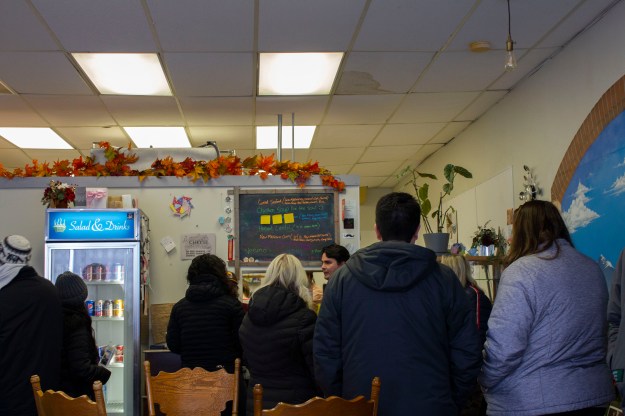
Juston Wadsworth, affectionately known as the ‘Soupman,’ passed away unexpectedly on December 13, 2022. To celebrate his life, family members gave away his soup to the community.

Juston Wadsworth was born on August 28, 1978. The father of three children and the owner of Rexburg’s very own soup shop, “Soup For You,” Wadsworth positively impacted the sleepy college town of Rexburg, Idaho.

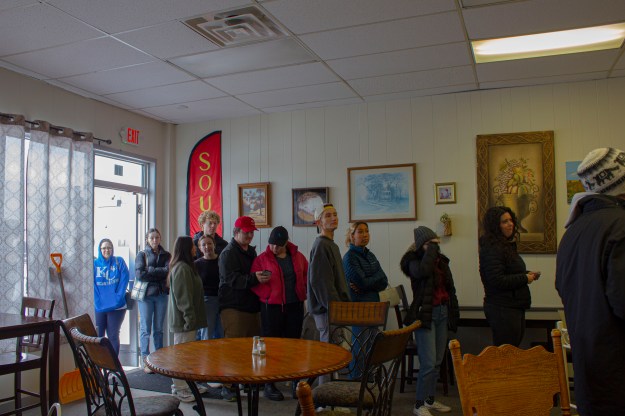
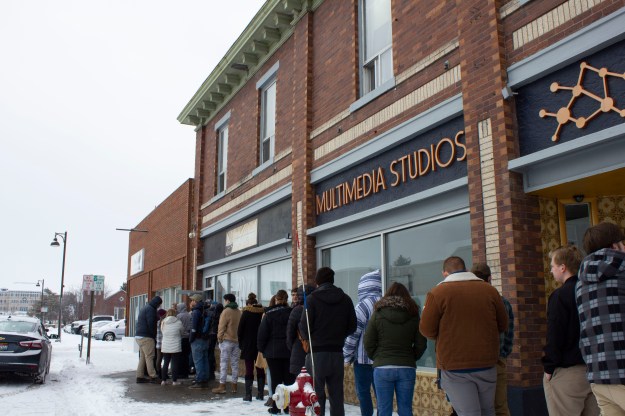
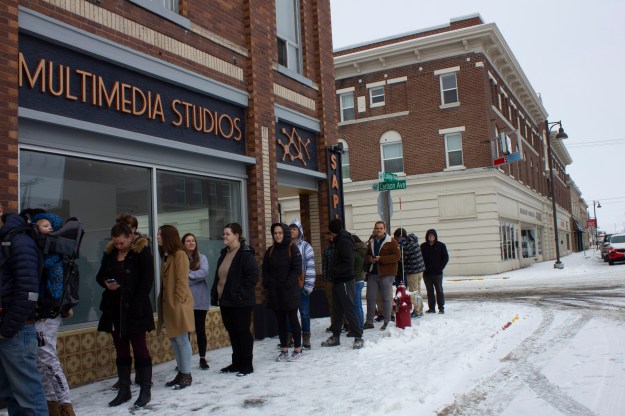
Inside the red brick shop with yellow antique tiling, the ambiance was heavy but full of love. Parents, children, family and college students created a line outside of the door, all for Wadsworth and his house-made soup.

The food options for the little soup shop’s last day of business were: Curried Seafood, Chicken Soup For the Soul, Cheesy Jalapeno and Bacon, Herbed Lentil, New Mexican Corn, and Creamy Tomato Pesto.

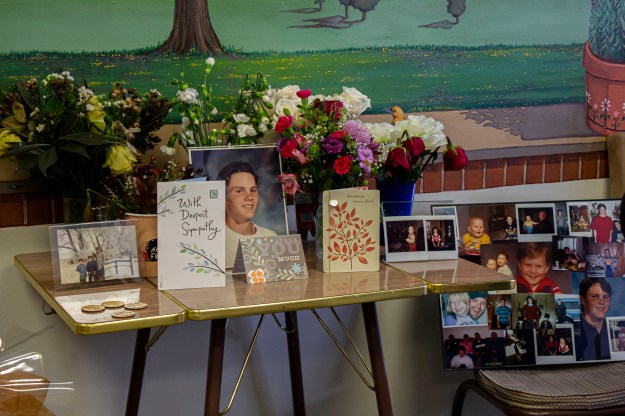
“Soup For You” was still filled with the same recognizable plants and collectible art, but this time, a shrine was made in Wadsworth’s name at the center of the store. Rexburg locals gave their condolences and graciously donated funds for Wadsworth’s funeral.

Rexburg’s skate scene: A built-in family

This article was written for BYU-I’s news organization, Scroll.


From baggy jeans to checkered Vans, skateboarding culture remains similar worldwide. But nestled in the small town of Rexburg, the atmosphere at the skatepark is a little different than normal, thanks to a strong religious influence and college-town atmosphere.

Mason Clark, a junior studying communication, is one student who lives to skate. Clark spends his free time making skateboarding videos and found it to be his passion.

“I love the skate scene in Rexburg because I feel like I am surrounded by a lot of people I go to school with,” Clark said. “I like that because we all have common ground … no matter how old you are or what level of skateboarding you are in, we can all connect.”

Rexburg’s skate culture runs strong, according to Clark.

“There’s definitely a culture at the skatepark, just like any anywhere,” Clark explained. “Everybody is automatically friends.”

Kalani Azabache, a student studying communication, is also a skater in the Rexburg area.

“I love the skate scene in Rexburg because we are all part of the same team despite our differences,” Azabache said. “There are a lot of young high school kids that come skate with us and it’s fun to hang out with them because they are learning.”

Azabache, otherwise known as “the man that falls the most”, loves the encouraging atmosphere at the park.

“Even when I take the gnarliest slams, everyone still motivates and encourages me to get back up,” Azabache said. “When I do land, everyone is super excited. It’s such a fun time to skate in Rexburg, everyone is like your family there.”

However, nothing comes perfect. Clark and Azabache shed some light on improvements that could be made to the Rexburg skatepark.

“I’ll be completely honest, I love the skatepark at Rexburg, but it’s definitely not made by professionals,” Clark said. “There are a lot of cracks everywhere — I feel like it’s made poorly.”

With chipped concrete and awkward placement, the park is not easy to skate.

“I love skating there with all my heart, but there are a couple of things they could get better,” Azabache said. “The transitions of the park are not the best, I wish it had a better flow to it. I feel like it appeals more to … the regular stance. For us goofy footers, we have to adapt to it.”

Despite its cracks and bumpy transitions, the skatepark holds a special place for Rexburg locals and BYU-Idaho college students.

“I still love the park,” Azabache said. “I’ll still skate there whenever I can.”

Click here to see one of Clark’s videos.

4 things you missed from the senior panel

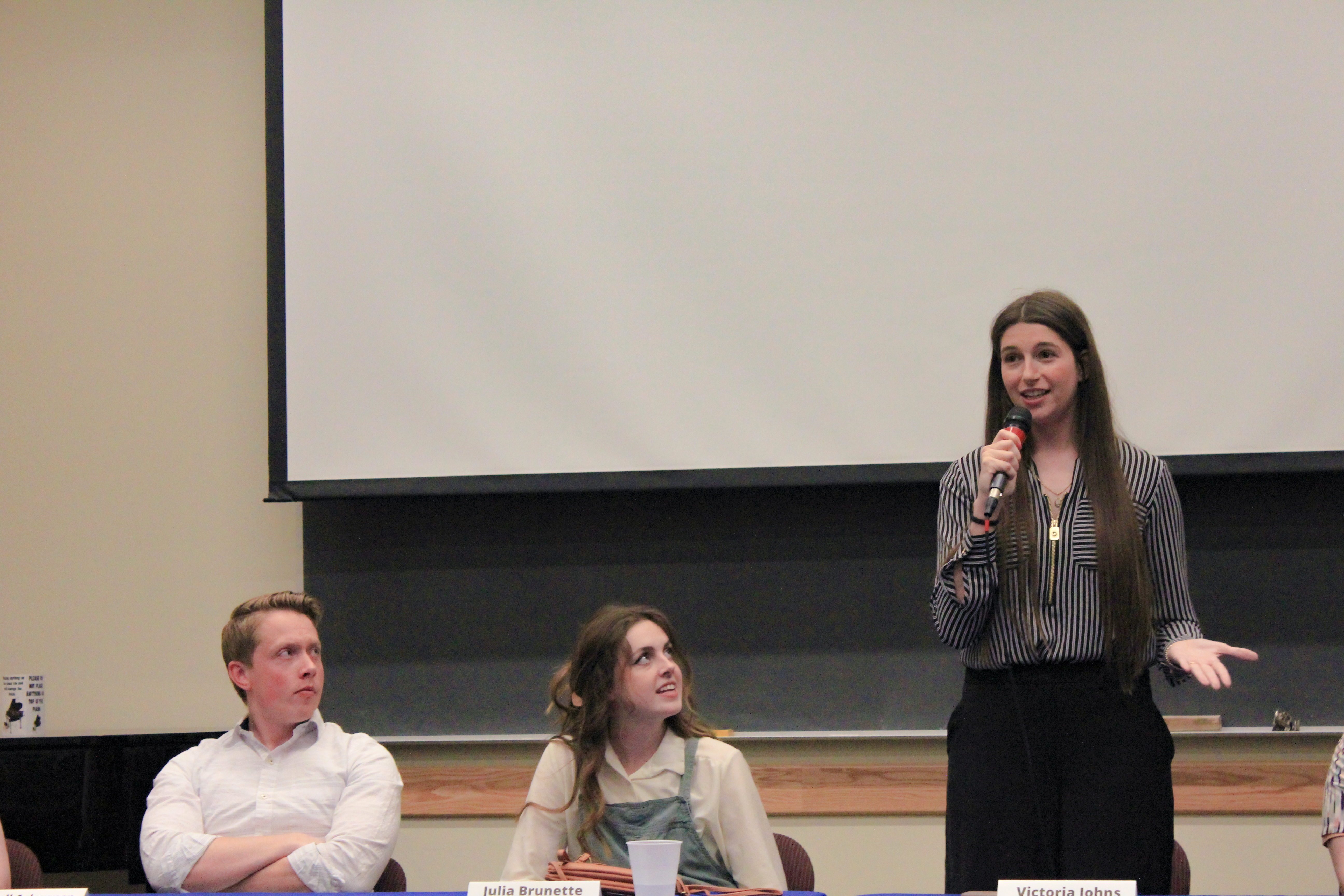
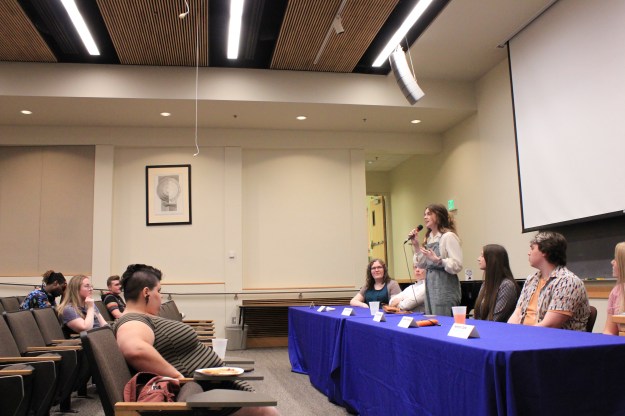
As the end of a college career is just within fingertips, nine BYU-Idaho seniors studying communication dedicated a portion of their evening to mentor inquisitive students. Free pizza and drinks were served in the basement room 35 at the Jacob Spori Building on Thursday, June 9.

Here are four things you missed from the communication department’s senior panel that can apply to all majors.

What’s the best way to set yourself apart from others?

Debroah Ownes said that making lasting and productive relationships with your professors is what will get you far. Owens explained that it is more important to put your differences aside and to receive critiques on your work.

Another senior added that one way she motivates herself is by creating a “to-do” list filled with little accomplishments. When something small gets done, she can build her confidence and work ethic piece by piece.

One senior, who has a video production emphasis, encouraged communication students to put their work online even if they do not feel confident in it. He explained that it is still an additional project that will show your growth, and someone may love your work and even use it.

Victoria shared her experiences with TikTok and the viral videos she received when she just put herself out there. She cautioned that within vulnerability, there is bullying, especially online. However, if we never put ourselves out there, we will never grow.

How did you know what emphasis to choose?

One senior shared that video production is something that he loves, but he was concerned about finances. After spiritual and academic reflection, he decided that it was better to do what he loves.

That passion has driven him to new and creative outlets. He said that if you continually strive to live the gospel and pay tithing, within the means of Heaven, the Lord will help you achieve the life you desire.

How did you know what emphasis to choose?

Owens shared to increase your chances of getting a leadership position would be to be a leader when no one is looking. Whether it’s staying after classes to ask questions, helping others with their work, doing the extra project, or developing beneficial relationships with your professors, you need to find ways that set you apart.

Matt elaborated on this concept and encouraged the students to ask themselves, “What sets you apart? What value can you add?”

The seniors collectively agreed that after graduation, people don’t care about the details of your degree – they just care you got one. Although having the physical Diploma is a reward, other factors must set you apart.

Ask yourself: What are your portfolio pieces? How are your people skills? What leadership experiences do you have to offer?

Last words of advice

As conversations came to a close and the evening grew darker, the communication seniors left us with some powerful words of advice and shared 3 golden qualities that create a successful individual.

First, someone that produces quality work. When people get to the top or a leadership position, it is usually reflected in their work.

Second, someone that is easy to work with. Other times, people will get to the top because of their charm and charisma.

Finally, someone that manages time efficiently. This means being on time, staying after and going the extra mile.

The seniors clarified that only two are needed to be successful, but all three are what will make you powerful. Communication students were also encouraged to take their time in school in order to produce better portfolio content.

Finally, they shared that it is okay to be selfish, as this is a selfish time in life. Burnette elaborated that as Latter-day Saints, this is an unpopular thought process, however, it is necessary when juggling projects, classes, internships, and the upcoming career world.

Why I transferred to BYU-I

This is a column piece written for BYU-I’s news organization, Scroll.


“You’re going to hate it.”

That was the response I got when I told my friends and family that I was transferring from Utah State University to BYU-Idaho.

To give context, I graduated high school in 2019 and went to Utah State that fall. I moved to an apartment complex where I didn’t know anyone, worked at a soda shop and took some general classes — your typical Utah college student.

I loved my experience in Logan. The campus was beautiful, my classes were uplifting and my roommates influenced my life in a positive way. While placed in fortunate circumstances, I continued with an aimless direction in my classes and life.

When the pandemic hit and in-person classes were canceled, I was relieved. I was unsure how to handle the college workload, so even though the world was afraid, I felt a weight off my chest. The lockdown ended up being a period of pristine reflection.

On paper, my life seemed complete, but I felt I wasn’t where I needed to be.

I remember sitting in my kitchen and a thought came to my mind, “You could go to BYU-Idaho.”

That sentence was quiet and vague. Although soundless, those thoughts spanned my mind, and I realized I was at a crossroads: I could stay and live my life in Logan or go on a different course in Rexburg.

After reflecting for a few weeks, one of my friends decided to transfer to BYU-I and asked me to be her roommate. To me, that was the push I needed. I didn’t let the confused responses I received cloud my vision, I just did it. I moved to Rexburg, Idaho, in the fall of 2020.

That first semester wasn’t what I had in my head.

The campus looked completely separate from a contemporary university. The people were different, the town was small and I wondered what I had gotten myself into. On day two of living in Rexburg, I called my family and told them that they were right.

But I decided to stay.

Close to two years later, I am a married woman planning to graduate next fall. Looking back, I realize that Rexburg has given me my entire life. This simple town has given me joy, relationships and lessons that are the most beautiful things I can offer from my life thus far.

Nothing is perfect — Rexburg is cold in the winter, hot in the summer and sometimes feels limiting. However, I let that modest location change my world in a positive way.

I started this process by going outside of my comfort zone. I changed my major, applied to be an editor for the school newspaper and spoke up about what was important to me, even if I was afraid of what others had to say. It was how I met my husband and learned to love who I see in the mirror.

If Rexburg is a difficult place for you, I get it. Despite what you have in mind, I encourage students here at BYU-I to take advantage of the social, academic and spiritual opportunities around them because it is more beautiful than you think.

So why did I choose to come to BYU-I? It was because I wanted to. I felt like it would give me a positive change.

Create direction in your life, even if you are discouraged and unsure. Your time here in Rexburg could create a stunning story for you if let it.

Deaf culture shines through in the ASL workshop

A lot of work and thought went into interviewing the students and choosing the direction of my story. As someone with serious hearing loss, deaf representation is a topic I am passionate about. I am happy I was able to shine a light on what deaf culture in eastern Idaho is like.


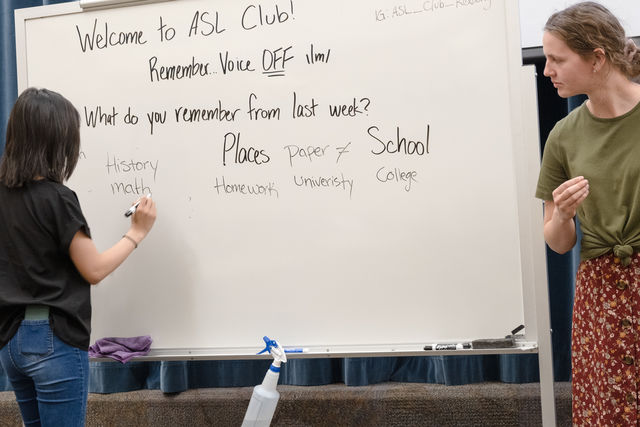
A vibrant silence fills room 286 in the Gordon B. Hinkley building on Tuesday evenings. The numbers are small, but the deaf and hard of hearing student body at BYU-Idaho is a welcoming group, proving that ASL culture runs beyond just the number of deaf students.

Jadyn Townsend, a student studying graphic design, is a part of the deaf community here on campus. Townsend is teaching the ASL workshop this semester, alongside hearing students Katie Stubbs and Kendal Murray.

Townsend shared her experience growing up in the small vacation town of Coeur D’Alene, Idaho, where there was little deaf representation.

“I always have been by myself ever since I was little,” Townsend said. “Back in my hometown, there are no deaf people, so I was mostly isolated all the time until I decided to go to BYU-I. I thought I would be an outcast again — just myself.”

Townsend said that even though she was used to the isolation, she has been able to find her place here in Rexburg.

“There’s not a lot of deaf students here, but I made friends with them and we hang out outside of school,” Townsend said. “It’s nice to have a community, even if it is small, and to see other hearing students wanting to be involved.”

While Townsend has found her niche, most of Idaho’s deaf culture resides in the city of Boise, said Heidi Smith, the Deaf and Hard of Hearing Services Coordinator at BYU-I. She explained that on campus there are “about five deaf students and 15 to 20 hard of hearing students.”

That is where the ASL workshop, also known as “Talking Hands,” comes into play. With participants of different levels chatting and growing their skills, this kind of immersion gives real-world experiences, said Davin Glenn, a senior studying public health.

“The workshop is focused on voices off, and I think it works really well. I’m glad they’re doing it that way,” Glenn said.

Glenn said that even though he is hard of hearing, he does not speak for the deaf community, only his own experiences.

“Having no ASL classes, that makes a dead zone for opportunities,” Glenn explained. “I think ASL classes would really help because it would bring more awareness about the deaf community, even if it is really small. They would feel a lot more included with the student body.”

Despite a lack of ASL classes offered at BYU-I, Smith encourages students to come to the workshop and communicate with people who are different than them.

“It’s okay to try and communicate,” Smith said. “The deaf students are more than willing to teach them sign. They want to communicate and have friendships just like everyone else. Don’t be shy; if you’re interested in making friends with deaf students, just try.”

Click here to view ASL devotionals and here to see the ASL workshop on Instagram.

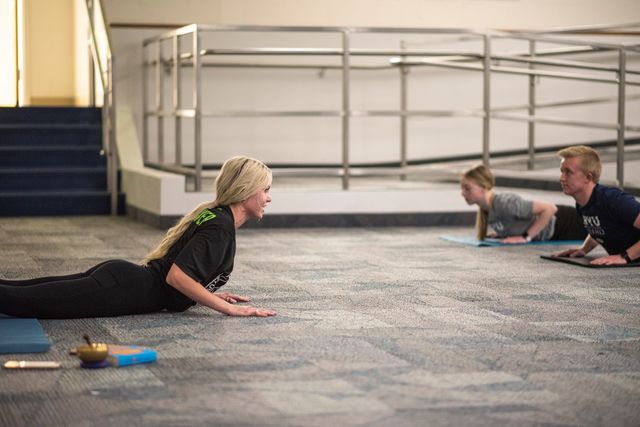
Adeline Blomfield: BYU-I’s yogi

This article was written for BYU-I’s news organization, Scroll.


BYU-Idaho’s John W. Hart Physical Education Building is a hub of construction chaos while being remodeled. However, students have found moments of peace with instructor Adeline Blomfield, a senior studying exercise physiology.

After working as a yoga instructor for over a year, Blomfield is spending her final weeks on campus teaching classes twice a week at the Hart building in room 210 at 8 p.m.

“This is my last semester,” Blomfield said. “I will still be in Rexburg until next winter when my husband graduates, and we will walk together … I will probably be teaching yoga off-campus just because this is a student job, but I’ll still be around.”

The exercise physiology major is a catalyst for Blomfield’s success in teaching.

“I had first taken the aerobics fitness technique class by Sister Robison where you are pretty much taught how to teach,” Blomfield said. “The exercise physiology major was a really good fit for me. That background really helped me understand the body more, which helps me understand the students more.”

Growing up in a health-focused family, Blomfield is passionate about the practice of yoga. Through her fitness experiences, Blomfield teaches others how to find balance in their busy lives.

“As I’ve been teaching and doing more (with yoga), I’ve noticed the big benefits with your mental health … and all these things that aren’t just physical,” Blomfield said. “I get a lot of nice feedback from the students about how I’ve been able to help different aspects of their lives just by going to a simple yoga class.”

One way Blomfield has been able to help students improve their well-being is by bringing A Cherokee Feast of Days: Daily Meditations by Joyce Sequichie Hifler to class.

Blomfield often shares the book, letting students flip through worn and beloved pages.

“They actually don’t print this anymore, so my mom bought these for every girl in the family from someone who was reselling them,” Blomfield said. “They have a different thought for every day of the year.”

At the closing of Blomfield’s classes, she opens the book to the current day of the year and reads a passage.

“I started doing it three semesters ago,” Blomfield said. “I’ve gotten a lot of comments from people saying how much they liked it. I even had one girl come to me and say that every class, she would write down what she gained.”

Blomfield encourages students to practice yoga, despite their experience level.

“You don’t have to go into yoga already knowing everything,” Blomfield explained. “Yoga is not perfection; it’s a practice. People can fall out of postures as much as they want, people can laugh and have fun with it … It can be whatever you want, and that’s what I really like about it.”

Through self-acceptance and becoming the best version of yourself, Blomfield believes that yoga practice and gospel living go hand-in-hand.

“Yoga is about connecting all aspects of your life,” Blomfield said. “I feel like the gospel is also about that. They’re both about balance and creating a happier and more loving version of yourself.“

View Adeline Blomfield’s fitness account here.

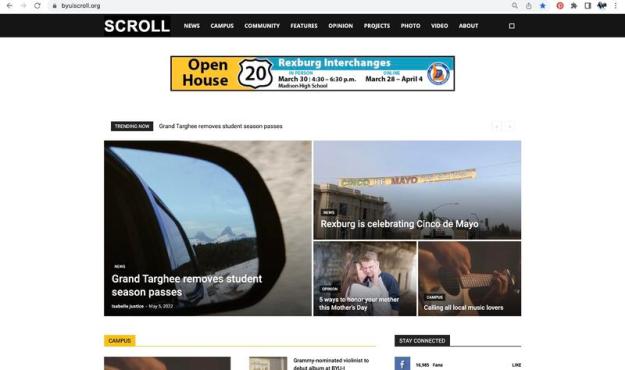
Grand Targhee removes student season passes

This was the first article I ever wrote for Scroll. I had family connections with Grand Targhee in Alta, Wyoming, so I was able to reach out to the marketing team and get inside information. I received a positive response to this piece, and it remains my most viewed (and personal favorite) article.


Trending article on the old Scroll website

Grand Targhee is a ski and snowboard resort located an hour east of BYU-Idaho in the small town of Alta, Wyoming. Known for its one-of-a-kind snow and views of the Tetons, Grand Targhee offers a small-town and affordable option to enjoy the mountains compared to the Jackson Hole Mountain Resort.

Student passes were originally $370 during the annual April sale. The replacement of a young adult discount caused the prices to rise to $509 during the month of April, $609 from May 1 to Sept. 30 and $899 on Oct. 1, according to Grand Targhee’s website.

Nate Hollingshaus, a junior studying software engineering, was one of the many students from BYU-I affected by this change. To show student backlash toward the removal of the discount, he created an online petition.

“I just wanted to show Targhee how much business they would be missing out on if they didn’t reinstate this pass,” Hollingshaus said. “Maybe if Targhee saw how much this would affect the students and how upset people were, they would reconsider.”

Lack of communication was the most frustrating part of the change for BYU-I students, specifically for those who have been going to Targhee for years.

“Most of my friends and I that have always bought that pass and have been doing it for two to three years,” Hollingshaus said. “I felt like it was a little disrespectful to those kids. There should have been some sort of formal email to those that did have one of the student passes.”

Halle Jae, brand and advertising manager at Grand Targhee, gave clarity on why student passes were discontinued.

“We were having a ton of issues with pass fraud and identifying who was a student, what it meant to be a student and what was fair to everyone,” Jae said. “I feel like there was a lot of controversy along the lines of who falls in this demographic of being able to use this huge discount.”

But college students were not the only reason for this change. Targhee has tailored the young adult pass toward 19 to 22-year-olds in Teton Valley.

“I do think that the kids that are working hard to pay rent in the valley now have this discount available to them,” Jae said. “Now they can ski and ride without being a full-time student and still getting a discount.”

After relaying reasons for ending the student discount, Hollingshaus explained that if Grand Targhee had put a statement explaining these issues, he would have had a different perspective.

“I’ll be honest, that makes sense,” said Hollingshaus. “I would have created a very different petition if I was provided that information … To students, it looks like they were just casting us out.”

Now in May, the season pass sale has ended, and students have come to terms with the young adult price.

“I think at the end of the day, you’ve got to move on,” said Hollingshaus. “I realized I’m married — I got other expenses to pay, and I might not be able to buy a season pass this year. I do think it would be good to have this conversation with Targhee to explain why we were frustrated.”

Skylar Kauf, marketing manager at Grand Targhee, indicated understanding toward those who are affected by the cancellation of the student discount. Kauf explained that Grand Targhee’s intention was not to kick college kids off the slopes but to combat pass fraud and increase inclusivity amongst young adults, specifically those in the Teton Valley.

Only time will tell if BYU-I students will continue the trek to Alta, Wyoming, this winter.

View Nate Hollingshaus’s petition here.