Rexburg’s skate scene: A built-in family

This article was written for BYU-I’s news organization, Scroll.


From baggy jeans to checkered Vans, skateboarding culture remains similar worldwide. But nestled in the small town of Rexburg, the atmosphere at the skatepark is a little different than normal, thanks to a strong religious influence and college-town atmosphere.

Mason Clark, a junior studying communication, is one student who lives to skate. Clark spends his free time making skateboarding videos and found it to be his passion.

“I love the skate scene in Rexburg because I feel like I am surrounded by a lot of people I go to school with,” Clark said. “I like that because we all have common ground … no matter how old you are or what level of skateboarding you are in, we can all connect.”

Rexburg’s skate culture runs strong, according to Clark.

“There’s definitely a culture at the skatepark, just like any anywhere,” Clark explained. “Everybody is automatically friends.”

Kalani Azabache, a student studying communication, is also a skater in the Rexburg area.

“I love the skate scene in Rexburg because we are all part of the same team despite our differences,” Azabache said. “There are a lot of young high school kids that come skate with us and it’s fun to hang out with them because they are learning.”

Azabache, otherwise known as “the man that falls the most”, loves the encouraging atmosphere at the park.

“Even when I take the gnarliest slams, everyone still motivates and encourages me to get back up,” Azabache said. “When I do land, everyone is super excited. It’s such a fun time to skate in Rexburg, everyone is like your family there.”

However, nothing comes perfect. Clark and Azabache shed some light on improvements that could be made to the Rexburg skatepark.

“I’ll be completely honest, I love the skatepark at Rexburg, but it’s definitely not made by professionals,” Clark said. “There are a lot of cracks everywhere — I feel like it’s made poorly.”

With chipped concrete and awkward placement, the park is not easy to skate.

“I love skating there with all my heart, but there are a couple of things they could get better,” Azabache said. “The transitions of the park are not the best, I wish it had a better flow to it. I feel like it appeals more to … the regular stance. For us goofy footers, we have to adapt to it.”

Despite its cracks and bumpy transitions, the skatepark holds a special place for Rexburg locals and BYU-Idaho college students.

“I still love the park,” Azabache said. “I’ll still skate there whenever I can.”

Click here to see one of Clark’s videos.

4 things you missed from the senior panel

As the end of a college career is just within fingertips, nine BYU-Idaho seniors studying communication dedicated a portion of their evening to mentor inquisitive students. Free pizza and drinks were served in the basement room 35 at the Jacob Spori Building on Thursday, June 9.

Here are four things you missed from the communication department’s senior panel that can apply to all majors.

What’s the best way to set yourself apart from others?

Debroah Ownes said that making lasting and productive relationships with your professors is what will get you far. Owens explained that it is more important to put your differences aside and to receive critiques on your work.

Another senior added that one way she motivates herself is by creating a “to-do” list filled with little accomplishments. When something small gets done, she can build her confidence and work ethic piece by piece.

One senior, who has a video production emphasis, encouraged communication students to put their work online even if they do not feel confident in it. He explained that it is still an additional project that will show your growth, and someone may love your work and even use it.

Victoria shared her experiences with TikTok and the viral videos she received when she just put herself out there. She cautioned that within vulnerability, there is bullying, especially online. However, if we never put ourselves out there, we will never grow.

How did you know what emphasis to choose?

One senior shared that video production is something that he loves, but he was concerned about finances. After spiritual and academic reflection, he decided that it was better to do what he loves.

That passion has driven him to new and creative outlets. He said that if you continually strive to live the gospel and pay tithing, within the means of Heaven, the Lord will help you achieve the life you desire.

How did you know what emphasis to choose?

Owens shared to increase your chances of getting a leadership position would be to be a leader when no one is looking. Whether it’s staying after classes to ask questions, helping others with their work, doing the extra project, or developing beneficial relationships with your professors, you need to find ways that set you apart.

Matt elaborated on this concept and encouraged the students to ask themselves, “What sets you apart? What value can you add?”

The seniors collectively agreed that after graduation, people don’t care about the details of your degree – they just care you got one. Although having the physical Diploma is a reward, other factors must set you apart.

Ask yourself: What are your portfolio pieces? How are your people skills? What leadership experiences do you have to offer?

Last words of advice

As conversations came to a close and the evening grew darker, the communication seniors left us with some powerful words of advice and shared 3 golden qualities that create a successful individual.

First, someone that produces quality work. When people get to the top or a leadership position, it is usually reflected in their work.

Second, someone that is easy to work with. Other times, people will get to the top because of their charm and charisma.

Finally, someone that manages time efficiently. This means being on time, staying after and going the extra mile.

The seniors clarified that only two are needed to be successful, but all three are what will make you powerful. Communication students were also encouraged to take their time in school in order to produce better portfolio content.

Finally, they shared that it is okay to be selfish, as this is a selfish time in life. Burnette elaborated that as Latter-day Saints, this is an unpopular thought process, however, it is necessary when juggling projects, classes, internships, and the upcoming career world.

Why I transferred to BYU-I

This is a column piece written for BYU-I’s news organization, Scroll.


“You’re going to hate it.”

That was the response I got when I told my friends and family that I was transferring from Utah State University to BYU-Idaho.

To give context, I graduated high school in 2019 and went to Utah State that fall. I moved to an apartment complex where I didn’t know anyone, worked at a soda shop and took some general classes — your typical Utah college student.

I loved my experience in Logan. The campus was beautiful, my classes were uplifting and my roommates influenced my life in a positive way. While placed in fortunate circumstances, I continued with an aimless direction in my classes and life.

When the pandemic hit and in-person classes were canceled, I was relieved. I was unsure how to handle the college workload, so even though the world was afraid, I felt a weight off my chest. The lockdown ended up being a period of pristine reflection.

On paper, my life seemed complete, but I felt I wasn’t where I needed to be.

I remember sitting in my kitchen and a thought came to my mind, “You could go to BYU-Idaho.”

That sentence was quiet and vague. Although soundless, those thoughts spanned my mind, and I realized I was at a crossroads: I could stay and live my life in Logan or go on a different course in Rexburg.

After reflecting for a few weeks, one of my friends decided to transfer to BYU-I and asked me to be her roommate. To me, that was the push I needed. I didn’t let the confused responses I received cloud my vision, I just did it. I moved to Rexburg, Idaho, in the fall of 2020.

That first semester wasn’t what I had in my head.

The campus looked completely separate from a contemporary university. The people were different, the town was small and I wondered what I had gotten myself into. On day two of living in Rexburg, I called my family and told them that they were right.

But I decided to stay.

Close to two years later, I am a married woman planning to graduate next fall. Looking back, I realize that Rexburg has given me my entire life. This simple town has given me joy, relationships and lessons that are the most beautiful things I can offer from my life thus far.

Nothing is perfect — Rexburg is cold in the winter, hot in the summer and sometimes feels limiting. However, I let that modest location change my world in a positive way.

I started this process by going outside of my comfort zone. I changed my major, applied to be an editor for the school newspaper and spoke up about what was important to me, even if I was afraid of what others had to say. It was how I met my husband and learned to love who I see in the mirror.

If Rexburg is a difficult place for you, I get it. Despite what you have in mind, I encourage students here at BYU-I to take advantage of the social, academic and spiritual opportunities around them because it is more beautiful than you think.

So why did I choose to come to BYU-I? It was because I wanted to. I felt like it would give me a positive change.

Create direction in your life, even if you are discouraged and unsure. Your time here in Rexburg could create a stunning story for you if let it.

Deaf culture shines through in the ASL workshop

A lot of work and thought went into interviewing the students and choosing the direction of my story. As someone with serious hearing loss, deaf representation is a topic I am passionate about. I am happy I was able to shine a light on what deaf culture in eastern Idaho is like.


A vibrant silence fills room 286 in the Gordon B. Hinkley building on Tuesday evenings. The numbers are small, but the deaf and hard of hearing student body at BYU-Idaho is a welcoming group, proving that ASL culture runs beyond just the number of deaf students.

Jadyn Townsend, a student studying graphic design, is a part of the deaf community here on campus. Townsend is teaching the ASL workshop this semester, alongside hearing students Katie Stubbs and Kendal Murray.

Townsend shared her experience growing up in the small vacation town of Coeur D’Alene, Idaho, where there was little deaf representation.

“I always have been by myself ever since I was little,” Townsend said. “Back in my hometown, there are no deaf people, so I was mostly isolated all the time until I decided to go to BYU-I. I thought I would be an outcast again — just myself.”

Townsend said that even though she was used to the isolation, she has been able to find her place here in Rexburg.

“There’s not a lot of deaf students here, but I made friends with them and we hang out outside of school,” Townsend said. “It’s nice to have a community, even if it is small, and to see other hearing students wanting to be involved.”

While Townsend has found her niche, most of Idaho’s deaf culture resides in the city of Boise, said Heidi Smith, the Deaf and Hard of Hearing Services Coordinator at BYU-I. She explained that on campus there are “about five deaf students and 15 to 20 hard of hearing students.”

That is where the ASL workshop, also known as “Talking Hands,” comes into play. With participants of different levels chatting and growing their skills, this kind of immersion gives real-world experiences, said Davin Glenn, a senior studying public health.

“The workshop is focused on voices off, and I think it works really well. I’m glad they’re doing it that way,” Glenn said.

Glenn said that even though he is hard of hearing, he does not speak for the deaf community, only his own experiences.

“Having no ASL classes, that makes a dead zone for opportunities,” Glenn explained. “I think ASL classes would really help because it would bring more awareness about the deaf community, even if it is really small. They would feel a lot more included with the student body.”

Despite a lack of ASL classes offered at BYU-I, Smith encourages students to come to the workshop and communicate with people who are different than them.

“It’s okay to try and communicate,” Smith said. “The deaf students are more than willing to teach them sign. They want to communicate and have friendships just like everyone else. Don’t be shy; if you’re interested in making friends with deaf students, just try.”

Click here to view ASL devotionals and here to see the ASL workshop on Instagram.

Thickets and Thorns

Through thickets and thorns
I still stand today
Through scars and songs
I’ve seemed to make my way
I give more than I should
For the vessels inside me are empty

And they say

Darling
You are the most important thing in this world
You are a temple
A God
To care for you is the priority

But
Nothing seems more vacant
Than trying to fill the well 
That has no water
For that water is nonexistent
And perishable

So I fill it with what I know

With mud and sticks
With thickets and thorns

Why did my roots hurt others so much?
My intention was good
Wasn’t it?

It was good
Through the thickets and thorns
Lakes and lilies
Death and darkness and duo
This and that

I pair so much together it seems to have leaked into my speech
I hope you find these pairs and make them 
Applicable

But I know I have found my path
And happiness is here
My roots have further to grow
And leaves are just starting
To peak through the forest’s way

I know He led me to a lake
Wells never suited me anyway

Adeline Blomfield: BYU-I’s yogi

This article was written for BYU-I’s news organization, Scroll.


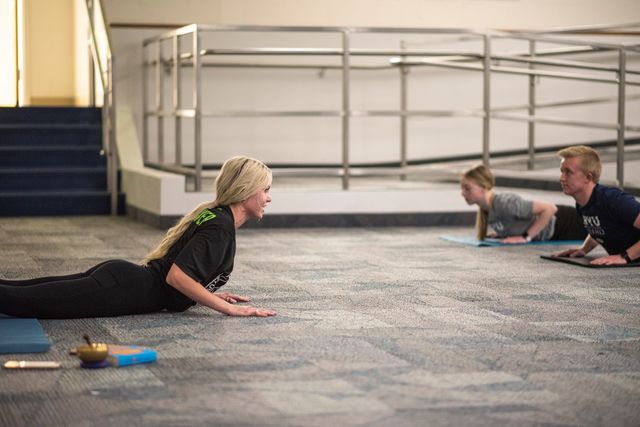
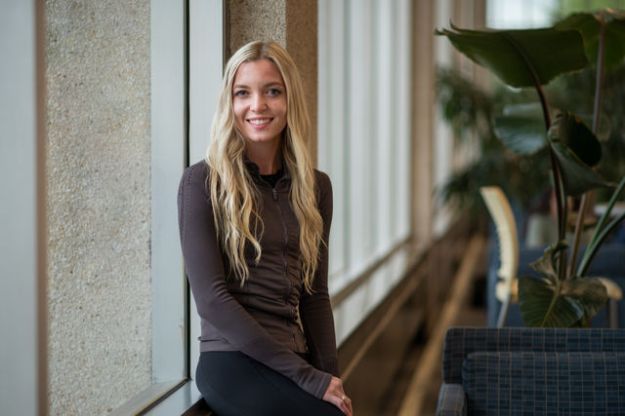
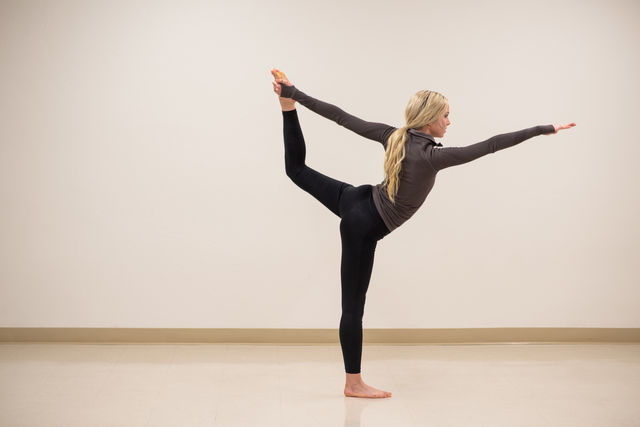
BYU-Idaho’s John W. Hart Physical Education Building is a hub of construction chaos while being remodeled. However, students have found moments of peace with instructor Adeline Blomfield, a senior studying exercise physiology.

After working as a yoga instructor for over a year, Blomfield is spending her final weeks on campus teaching classes twice a week at the Hart building in room 210 at 8 p.m.

“This is my last semester,” Blomfield said. “I will still be in Rexburg until next winter when my husband graduates, and we will walk together … I will probably be teaching yoga off-campus just because this is a student job, but I’ll still be around.”

The exercise physiology major is a catalyst for Blomfield’s success in teaching.

“I had first taken the aerobics fitness technique class by Sister Robison where you are pretty much taught how to teach,” Blomfield said. “The exercise physiology major was a really good fit for me. That background really helped me understand the body more, which helps me understand the students more.”

Growing up in a health-focused family, Blomfield is passionate about the practice of yoga. Through her fitness experiences, Blomfield teaches others how to find balance in their busy lives.

“As I’ve been teaching and doing more (with yoga), I’ve noticed the big benefits with your mental health … and all these things that aren’t just physical,” Blomfield said. “I get a lot of nice feedback from the students about how I’ve been able to help different aspects of their lives just by going to a simple yoga class.”

One way Blomfield has been able to help students improve their well-being is by bringing A Cherokee Feast of Days: Daily Meditations by Joyce Sequichie Hifler to class.

Blomfield often shares the book, letting students flip through worn and beloved pages.

“They actually don’t print this anymore, so my mom bought these for every girl in the family from someone who was reselling them,” Blomfield said. “They have a different thought for every day of the year.”

At the closing of Blomfield’s classes, she opens the book to the current day of the year and reads a passage.

“I started doing it three semesters ago,” Blomfield said. “I’ve gotten a lot of comments from people saying how much they liked it. I even had one girl come to me and say that every class, she would write down what she gained.”

Blomfield encourages students to practice yoga, despite their experience level.

“You don’t have to go into yoga already knowing everything,” Blomfield explained. “Yoga is not perfection; it’s a practice. People can fall out of postures as much as they want, people can laugh and have fun with it … It can be whatever you want, and that’s what I really like about it.”

Through self-acceptance and becoming the best version of yourself, Blomfield believes that yoga practice and gospel living go hand-in-hand.

“Yoga is about connecting all aspects of your life,” Blomfield said. “I feel like the gospel is also about that. They’re both about balance and creating a happier and more loving version of yourself.“

View Adeline Blomfield’s fitness account here.

Grand Targhee removes student season passes

This was the first article I ever wrote for Scroll. I had family connections with Grand Targhee in Alta, Wyoming, so I was able to reach out to the marketing team and get inside information. I received a positive response to this piece, and it remains my most viewed (and personal favorite) article.


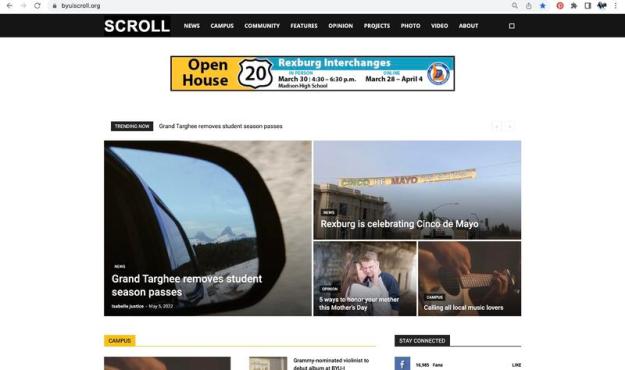
Trending article on the old Scroll website

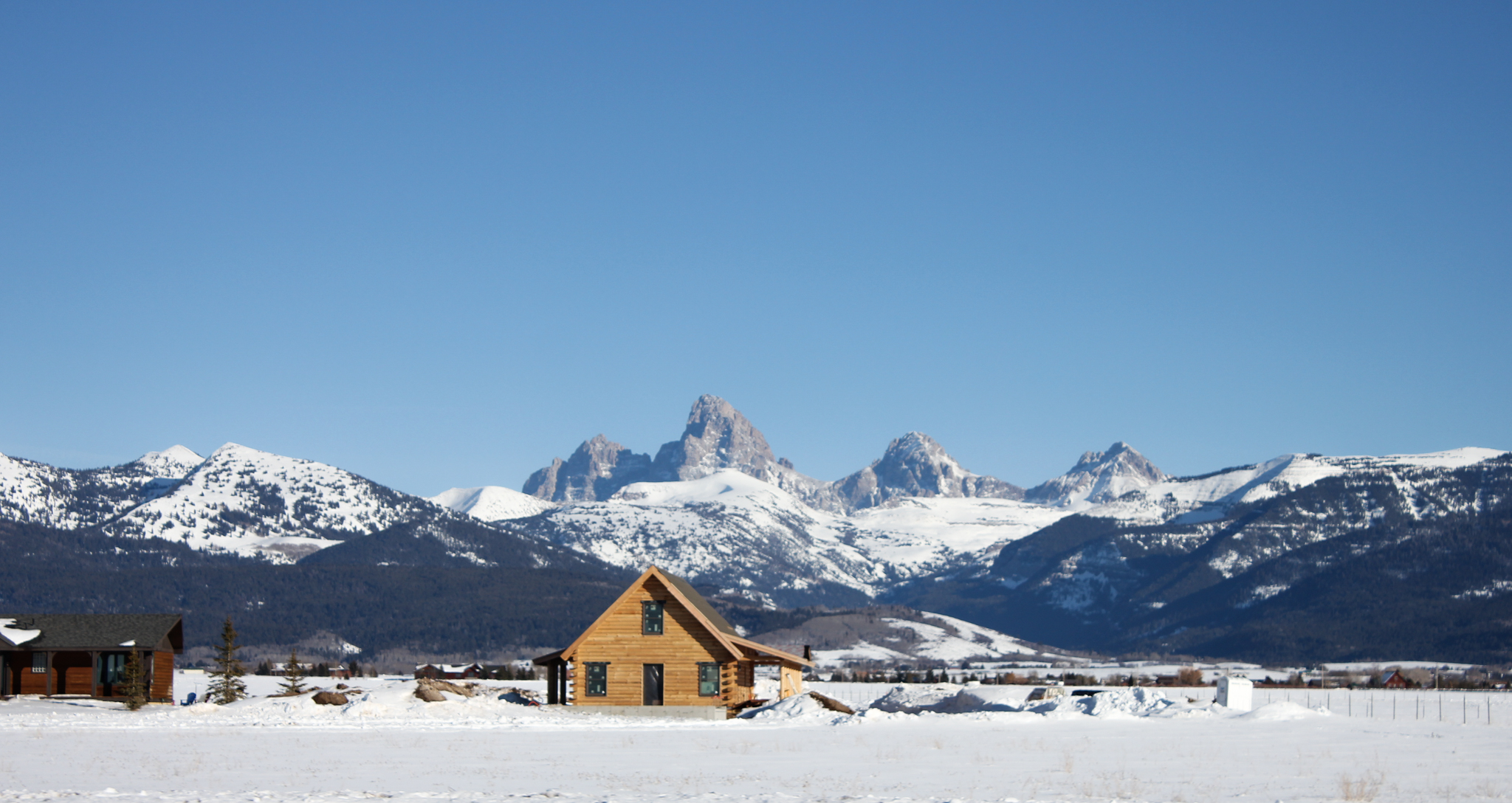
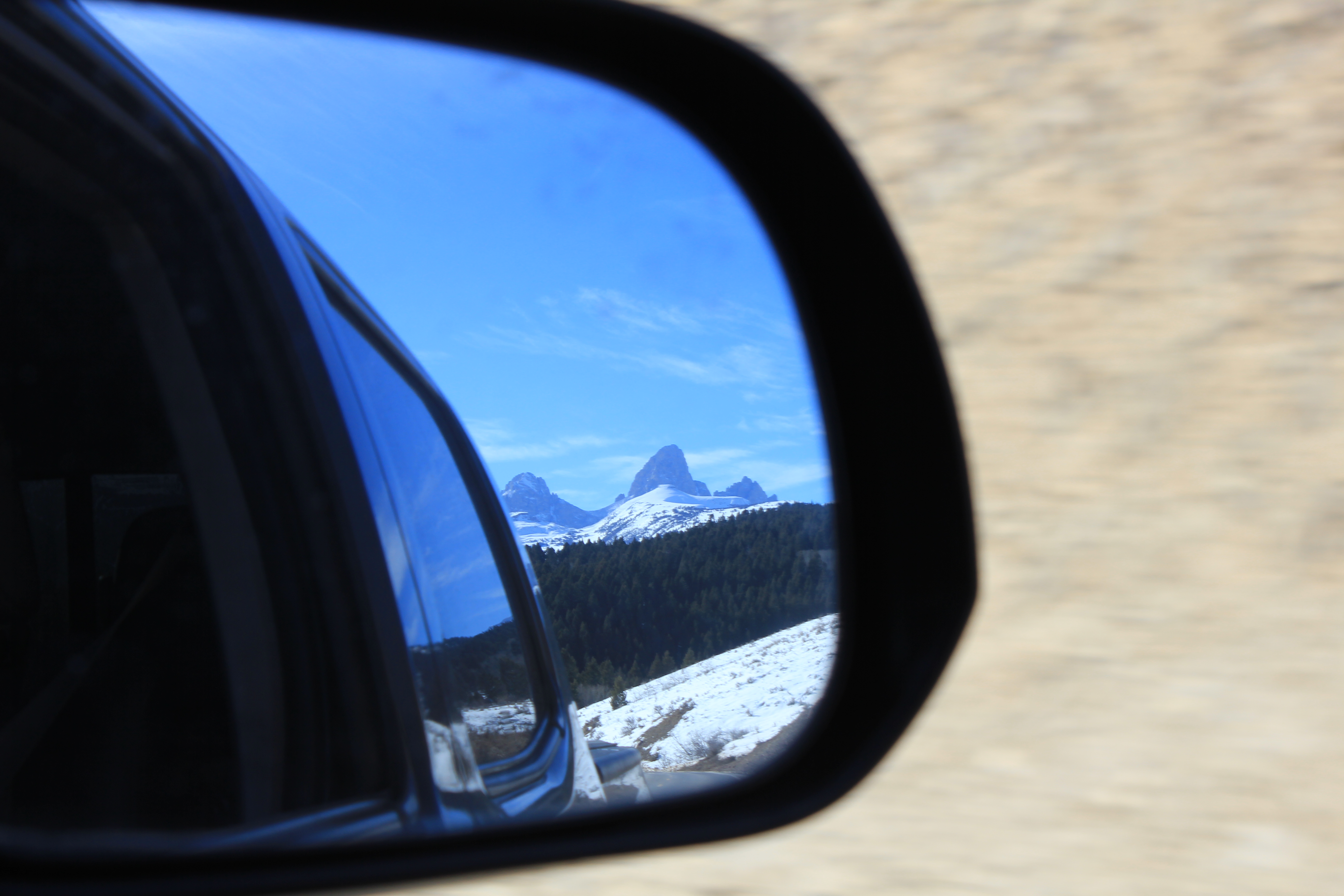
Grand Targhee is a ski and snowboard resort located an hour east of BYU-Idaho in the small town of Alta, Wyoming. Known for its one-of-a-kind snow and views of the Tetons, Grand Targhee offers a small-town and affordable option to enjoy the mountains compared to the Jackson Hole Mountain Resort.

Student passes were originally $370 during the annual April sale. The replacement of a young adult discount caused the prices to rise to $509 during the month of April, $609 from May 1 to Sept. 30 and $899 on Oct. 1, according to Grand Targhee’s website.

Nate Hollingshaus, a junior studying software engineering, was one of the many students from BYU-I affected by this change. To show student backlash toward the removal of the discount, he created an online petition.

“I just wanted to show Targhee how much business they would be missing out on if they didn’t reinstate this pass,” Hollingshaus said. “Maybe if Targhee saw how much this would affect the students and how upset people were, they would reconsider.”

Lack of communication was the most frustrating part of the change for BYU-I students, specifically for those who have been going to Targhee for years.

“Most of my friends and I that have always bought that pass and have been doing it for two to three years,” Hollingshaus said. “I felt like it was a little disrespectful to those kids. There should have been some sort of formal email to those that did have one of the student passes.”

Halle Jae, brand and advertising manager at Grand Targhee, gave clarity on why student passes were discontinued.

“We were having a ton of issues with pass fraud and identifying who was a student, what it meant to be a student and what was fair to everyone,” Jae said. “I feel like there was a lot of controversy along the lines of who falls in this demographic of being able to use this huge discount.”

But college students were not the only reason for this change. Targhee has tailored the young adult pass toward 19 to 22-year-olds in Teton Valley.

“I do think that the kids that are working hard to pay rent in the valley now have this discount available to them,” Jae said. “Now they can ski and ride without being a full-time student and still getting a discount.”

After relaying reasons for ending the student discount, Hollingshaus explained that if Grand Targhee had put a statement explaining these issues, he would have had a different perspective.

“I’ll be honest, that makes sense,” said Hollingshaus. “I would have created a very different petition if I was provided that information … To students, it looks like they were just casting us out.”

Now in May, the season pass sale has ended, and students have come to terms with the young adult price.

“I think at the end of the day, you’ve got to move on,” said Hollingshaus. “I realized I’m married — I got other expenses to pay, and I might not be able to buy a season pass this year. I do think it would be good to have this conversation with Targhee to explain why we were frustrated.”

Skylar Kauf, marketing manager at Grand Targhee, indicated understanding toward those who are affected by the cancellation of the student discount. Kauf explained that Grand Targhee’s intention was not to kick college kids off the slopes but to combat pass fraud and increase inclusivity amongst young adults, specifically those in the Teton Valley.

Only time will tell if BYU-I students will continue the trek to Alta, Wyoming, this winter.

View Nate Hollingshaus’s petition here.

When We Meet Again

I hope when we meet again 
You can see a mecca
I have made in myself
A road
I have paved myself
Trees I have planted
And kept alive
Myself

By being myself

I hope when we meet again
You can be proud of the
Documents
I have collected in my speech 
Essays
That reflect in my skin
So many words
I have pieced together
That you can see me glowing

Maybe it’s the lighting

Or the lighting in me
That dissipated
Never quite gone
Just spread apart
As if galaxies
Were waving to distant friends
Not blinding
But merely expanding

Growing

Growing to where
I can finally see past
The vines
That held me back
For so long

I guess when we meet again
You can build thoughts of me
For yourself
And I’d hope they have changed

But it’s not to you
What I am
I guess I shouldn’t mind
The status of me
In the mind of you
In the mind of anyone

I finally fit
In this body
And want to share

Whenever we meet again

Tripwires of the Mind

I feel as if I am the space between two
A gap in the fabric sewn
Traveling a road
With traits I didn’t choose
What an embedded
Breath
We have been searching for substance 
Looking for what was promised

It’s a sudden tap on a window
You see

A bomb in a birdcage
And the brief absence
Of a conscious mind
On repeat

Stitch me one by one
Push me out to sea
As I walk among tripwires of the mind
I will count away the bursts
In the square formation
Taught to me

Wandering
Wasting
The rise I am given

Nostalgia

In an instant
Like a crack in thinning ice
I am flung into a time I had since stored away
A hidden file in my mind
Playing
Mimicking a younger self
Scratched
Shrugged
Grazing the surface of a time past
Not quite as clear
But still so crisp
That you could hear the sweet lyrics
Which were so comforting once before

Suddenly I am dancing with a previous ego
And I watch her fade away
Analyzing this time and the next
A dull ache creeps into my stomach
Seeing this younger me
My heart stays there
And becomes heavy

Just like sticky honey
With a soft residue
It leaves a mark
A dent in the wall
A crack on a screen

Again
And again

As open jars are shattered across a glass floor
They reflect a stronger
And nostalgic mind

If you choose to stare back
You can see a previous life
Fly by as quick as it arrived


The World at Our Fingertips

With the rise of new technology, there are the critics. The skeptics. The ones who believe that your iPhone will melt your brain. To what extent have smartphones influenced us? How has it changed our social development?

On the stage of Macworld in 2007, Steve Jobs introduced the original iPhone as “an iPod, a phone, and an internet communicator.” Soon after, tech companies surrendered to Apple’s grasp on the market because of their innovative ideas. According to TIME Magazine, the iPhone was a status symbol and the foundation of what a smartphone should accomplish. In 15 years, we’ve been able to see the effects of such a powerful device.

“While it offers many opportunities for positive and rewarding uses, there are also clear negatives to the smartphone,” wrote Heidi Hackford in her contribution to the Computer History Museum. “People can become addicted to constant connection and feel powerless and depressed without it.”

Since 2010, iPhone users trickled down from adults to children. Being the oldest of five siblings, I have seen the difference in childhood between each sibling. For example, my younger sister started looking more mature than I did when I was her age. The same has gone for my brothers.

Katie Webb, 21 years old and a full-time college student at Utah State University, understands this difference. She has also seen the first-wave effects of the iPhone and is part of the iGen, a group of children that knew a childhood without a smartphone and entered Junior High with one.

“The people I followed I wasn’t actually friends with I think that shows what I thought social media was even before high school,” said Webb. “You’re supposed to post things that show your identity. You’re supposed to make yourself seem desirable or presentable … for me, (social media) wasn’t something that I did for fun, it was something that I did because I felt I was supposed to.”

I remember this clearly in the mid-2010s. Social media was viewed as a portfolio of your life at the mercy of the internet. It was a game, a comparison, but that mindset has shifted in the last 5 years.

“It’s more just for the fun of it,” explained 14-year-old Esther Facer. “Some of my friends ask why I don’t post and it’s just like I don’t really care. I think it’s more about your personality than your age. Most of the personalities of our age group look at social media as a joke than serious like people your age did when they were younger.”

Why was my experience so different than hers? Zhaocai Jiang, a psychologist who led a study for BMC Psychiatry based on screen time, found that the adverse effects of screen time apply to everyone, but are amplified due to personality traits and self-control. He believes the more we give in screen time, our self-control is negatively impacted. And this is much worse for those with obsessive tendencies.

Technology is viewed as negative and addictive by a large portion of the media.

“There’s not a single exception,” said Jean M. Twenge in her editorial for The Atlantic. “All screen activities are linked to less happiness, and all non-screen activities are linked to more happiness.”

While this is proven to be true, Vicky Capua commented that perhaps it is a double-edged sword. Capua explained that technology is a powerful tool and its results are dependent on how you use it. Webb also felt we should put some of the responsibility on ourselves.

“It’s going to be better for the people who have a different mindset of how they look at social media and that’s what going to affect their children,” Webb explained.

Whether it’s the fault of big-tech incentives or self-discipline, a common parenting goal is to make our children’s generation a happier one, even with invasive social media.

“It’s time for us to consider another possible explanation for why our kids are increasingly disengaged,” said Alexandra Samual in her editorial for Jstor Daily. “It’s because we’ve disengaged ourselves; we’re too busy looking down at our screens to look up at our kids.”

I have studied the ramifications of screen time, started a conversation with others, and looked at my own habits. In doing so, I can better understand those who believe that “the iPhone will melt your brain,” as well as the argument that our outcome is dependent on us.

As I watch my siblings grow up, keep in contact with childhood friends, and set my own boundaries with technology, I understand that screen time will continue to evolve. The world will revolve around it. After all, innovation is one of humanity’s strengths.

Ultimately, we are social creatures and we need each other. Society can reach to understand the effects of screen time while creating a better world for the future generation. Although a predicament, smartphones are a powerful tool, and it’s up to us how we use it.
Create an Advertisement: In the Fast Lane

Ad Campaign Presentation

For a school assignment, I was asked to create an advertisement. I wanted to choose an advertisement for something that I was interested in and had ties to. What better way to accomplish this than an advertisement for Harley riders, being that my parents are avid Harley fans?

I did a quick Google Image search and this was the ad that popped up. The Creative Circus, an art college in Atlanta, Georgia, created an ad campaign for Harley Davidson, focusing on motorcyclist women, self care and the freedom that comes with the sport. They had two other ads that went cohesively with the original photo, but did not include a motorcycle. That is where my inspiration came in.

Original Ad Analysis

There are so many design elements that I love about this advertisement. The first arrow shows contrast because of the black shadow, grey background and blue road. The black sticks out from the blue and draws your eyes to the woman. There is also contrast among the black and white boxes lining the top and bottom.

The second arrows points to repetition, where the same fonts are used to get the ad’s point across.

The third arrows reference proximity. The main focus of the ad is to “accelerate” and the descriptive text is right aligned and in a smaller font, showing that it is less important.

The fourth arrow points to the logo and refers to proximity. This is because the logo is important, otherwise it would be hard to know what the ad is for. However, it is not the most important part of the piece, the female motorcyclist is.

I also love the color choices of “Inhale. Exhale. Accelerate.” The “Accelerate.” is the classic Harley Davidson orange, and I think the blue and greens blended together well with the color of the motorcyclist, road and background. I also enjoyed the typography of “Accelerate.” because it is slightly italicized compared to the first two words. I love how there was only a stroke for the text because it shows off the photography well.

New Advertisement

For my Campaign Ad, I wanted to do another female motorcyclist ad. I flipped the photo to face the opposite direction and incorporated colors of purple and maroon with hints of light blue rather than the blue and grey combo from the original ad. Arrow 1 shows contrast. I edited the photo’s colors to make the woman a dark maroon to pop out from the light background. Arrow 2 points to repetition. I made opaque boxes overlapping each other for the design aspect. I added it to the bottom right corner to create flow in the photo. I use Harley Davidson orange for this design. Arrow three points to alignment. The tagline was left aligned and I made the top line bigger than the bottom because that was the main message I wanted to portray. Arrow 4 points to the logo and refers to proximity of the logo. Like the original ad, the logo was important but the main focus is the motorcyclist so it was left aligned to the bottom. Typography wise, I created a darker shadow for the bottom line, creatine dimension.

Conclusion

At the end of the day, I wanted these two ads to be cohesive without copying each other. I think the color choices are similar but different enough to be two different advertisements. I enjoyed playing with the colors of my original photos as well was creating background designs in Illustrator. I love the company as well as the message of the ads.

Personal Memoir

I quickly sunk into the wooden chair, despite its discomfort. I covered my eyes, plugged my ears, and made little sing-song voices to hide the fact that my parents were squeezing any ounce of self-confidence I had fabricated over the years. Every story, every quirk, every skill I worked so hard to bury, was exposed. There was no hiding the fact that the boy I wanted to marry got to hear all about the real me, and this time I couldn’t change it.

From a little kid to 14 years old, I was a horse girl. Yes, all the stereotypes applied to me. I walked around with proud red cowgirl boots and went to horse lessons. To make matters worse, I would pretend to be whatever animal I was obsessed with that week.

Halloween 2008

In 2nd grade, I begged my mom to make me a raccoon costume for Halloween. She made a grey onesie, black velvet ears and painted my face to replicate a racoon’s mask. I still have those pictures of me dressed up. From 15 to 19, I spent a great deal of my free time deleting pictures, ripping out journal entries, throwing away schoolwork and rewriting my narrative. I subconsciously started introducing as myself “Izzy” to distance myself from the horse crazed “Isabelle”. I worked so hard to change my personality and as I stepped back into the shadows, it seemed everyone else forgot about that horse girl too.

Before I got engaged, I brought my boyfriend to Utah to meet my family. He passed with flying colors of approval from my parents and siblings. The last night of our trip, we went to an Italian restaurant in Ogden. We ordered appetizers and my parents got to share their stories of snowboarding while my boyfriend shared surfing memories. Things were going great, they were getting along and I got to see the look of joy from the 3 people I loved the most in the world. Our dinners came to the table, then my nightmare began.

“Isabelle loved to write stories about horses. She used to make books and read them to us.”

“Isabelle has a great singing voice! She used to write songs and sing them on the ukulele.”

“One year for Halloween, Isabelle was a racoon! She would crawl on the ground to get into character.”

My boyfriend was laughing hysterically and intermittently looking my way. He had this positive yet shocked expression that there was so much he didn’t know about me. My parents beamed with pride as they shared story after story. I felt a physical pain caused purely by my own mind and I shut down for the rest of the night.

When we got home, my boyfriend gave me an understanding hug. He pulled back and asked, “Why did you never tell me?” In three months of us dating, I worked so hard to hide any emotion I felt. I didn’t want to be that girl. I liked this guy so badly that I didn’t want to mess things up. I never told him how I was a great artist or wrote beautiful poetry. I never told him how my first word was horse or that I was an emotional person. Yet that night, the walls I had built started to crumble. To my surprise, he told me he loved me more because of my quirky traits. The gears in my brain began to turn; sometimes people love you even if you think you’re weird, even if you don’t deserve it at all. Sometimes, it’s just there.

Fly On the Wall

For this assignment, I was to simply people-watch and
write what I saw. This was the result.


A man in a black trench coat leaned against his shopping cart. With his dark-brimmed hat tilting towards the front of his head, the man was serious. Somber even, and he tapped mindlessly on his phone.

At Walmart, there were a humorously large amount of newlywed couples. Each pair that walked quickly away from the self-checkout, and into the snowfall, held hands. Maybe it was a statement of their relationship.

College girls that walked around Walmart were almost always in a group. Presumably roommates, and they gossiped in hushed tones. Some wore hoodies and joggers while others wore beanies and white vans. Rednecks walked out with cases of beer and reeked the stain of a cigarette. There were no packs of college boys on a Thursday evening, and if there was a young unmarried man, he shopped exclusively alone. Mothers rushed quickly out the store, carrying loud children, or scolding an upset pre-teen. Some mothers walked by with piles of groceries and babies that held a mindless wide-eyed gaze.

In the Subway dining area, the store was empty — except for one employee that paced in the backroom. On the wall, a paper stated, “Hiring! $10 per hour minimum. Apply at Subway Careers.” An old man tapped the bell for a sandwich.

A Walmart employee stands next to the entrance, welcoming in strangers that don’t reply. Winter is here, and while Walmart stays busy on the outside, the mundane pace of life lives on the inside.

My new years check-in

It was the year 2008. My little body sat in the stiff, adjustable chair next to the family desktop computer. I opened a word document and dragged Google images onto the blank workspace. I wrote my heart out based on uncontextualized images. It was silly stories about bears, poorly executed poems about flowers or journal entries about my school day. Those words are gone, lost on some formidable hard drive, but the memory remains still.

As the preteen years came and went, I lost that little artist. She was buried under heaps of self-doubt and negativity. That doubt extended until I was 20 years old. It was unfortunate because 2021 was the most growing year of my life. I wasn’t there to experience it, to document it.

But I was still loved nonetheless.

At the beginning of 2022, I dedicated this to being the happiest year of my life. I didn’t know what that meant, but I knew I wanted to be happy. What better way to achieve that than a new year?

I have a habit of taking new years resolutions quite seriously. I check in with myself throughout the year and usually have a list of goals hung up on a door. This year’s resolutions were to be present, social, share my work and be heard.

For whatever reason, this year has blessed me tremendously. I think it was because I allowed myself to be myself. I allowed the people that love me to love me. I stopped putting up walls and realized the potential that I was told I had so much of as a little girl.

My husband told me that I was going to write amazing things this year. He said I would lift people up and achieve powerful things. Recently I had a friend tell me that I was beautiful, inside and out. Those words have created a newfound love and protection for myself.

I know I’m not perfect, but I work hard every day to reach my potential and lift others. I have a new kind of acceleration, just like that seven-year-old girl with all the support in the world. Now I have the eyes to see it. To believe it.

2022 is a good year.