For a journalism course, I wrote a feature article about the Library Aid in the Special Collections archives at BYU-Idaho. I created a magazine with this content, and below are the results of this project. This article is also on Scroll.
“It’s important that history is recognized as being important,” said Braden.
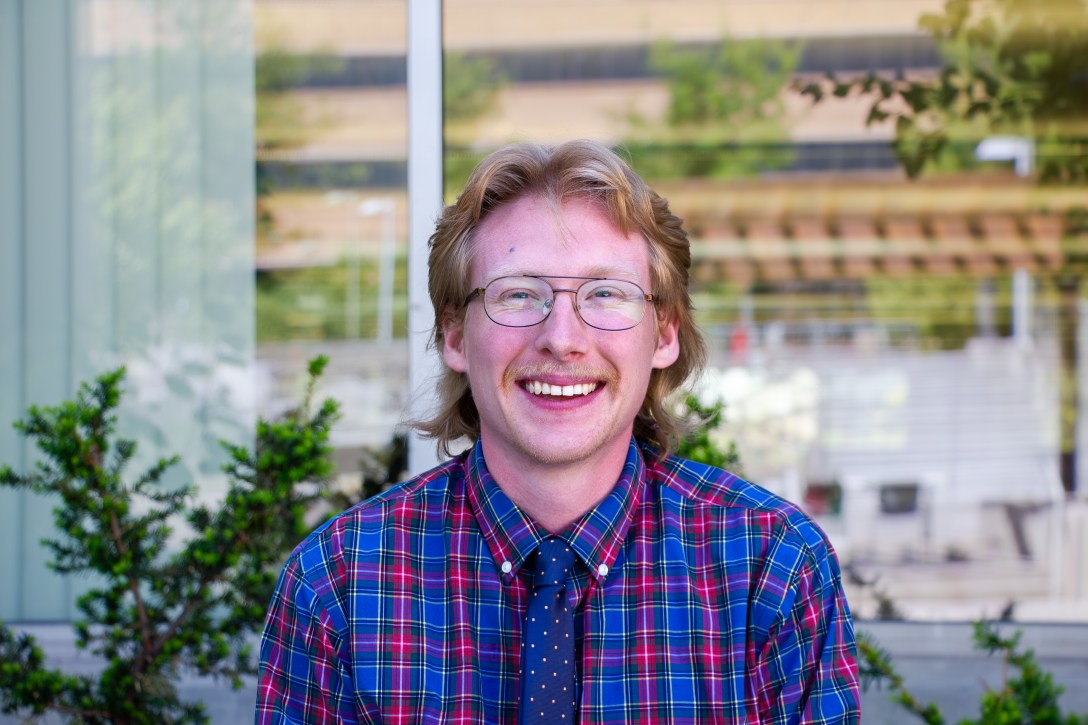
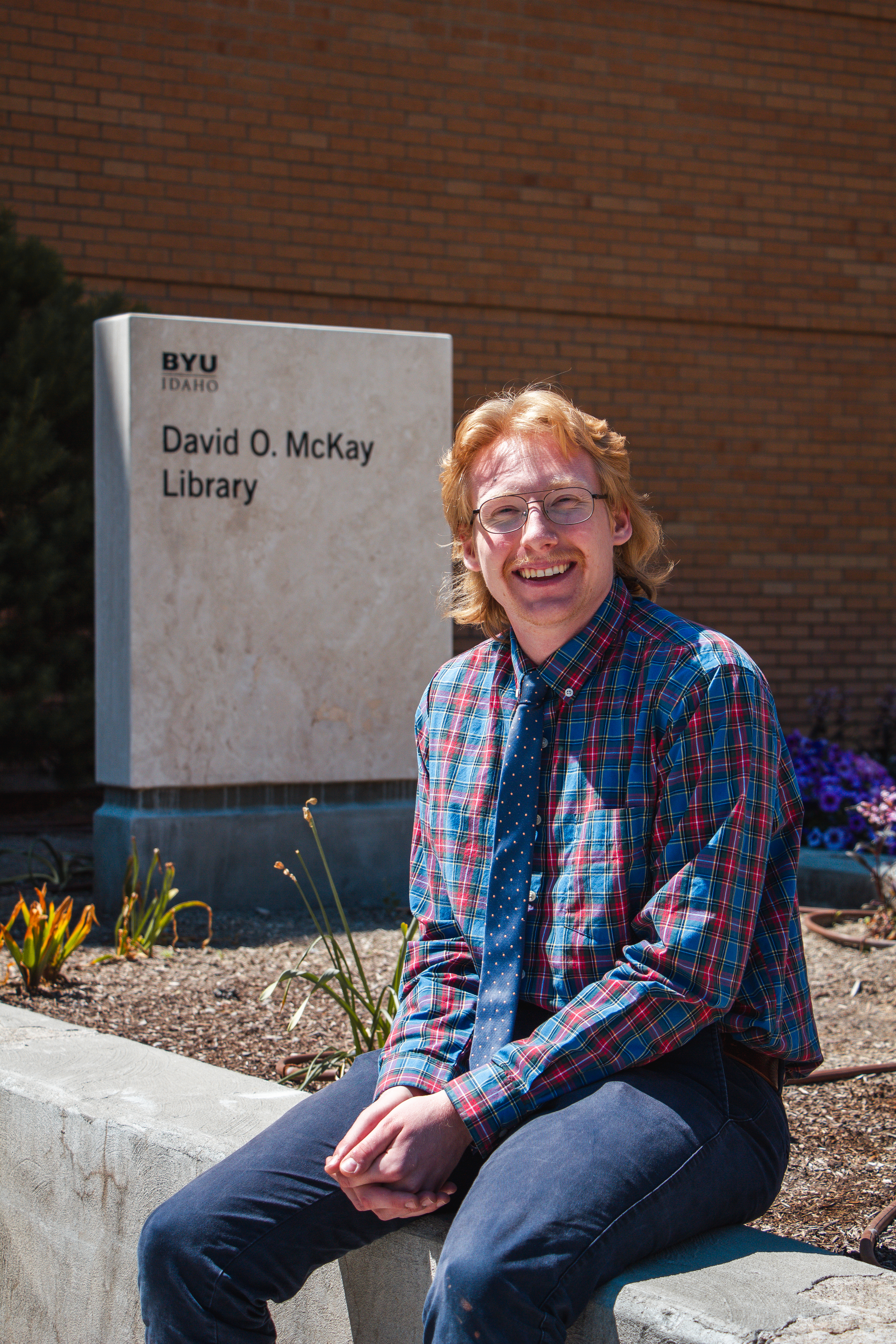
His aviator glasses sat comfortably on the bridge of his nose. His honey-blonde hair was tucked behind his ears. His index finger and thumb rested on his chin as he calculated an insightful answer to my overarching question. When I asked Braden Chancellor if it’s important that everyone has a basic knowledge of history, he didn’t give a long-winded answer like I was expecting. He didn’t preach about how the study of history is a dying art, instead, he explained that historians want their profession recognized and respected.
“We have a lot of focus on STEM, right? Just as a university and a nation,” Braden said, his hands danced in the air to emphasize his point. “I think that a focus on STEM is great and some could argue that it has more value, but I know history has a significance that people don’t recognize.”

Braden Chancellor is a Library Aide for the Special Collections, an archive on campus that is tucked away on the second floor of the library. It is a place where prehistoric artifacts and the history of Upper Snake River Valley are kept safe. The room itself is quiet. Cozy. Serene. The carpet was brown and blue. Vintage, from the 50s, Braden said. There were shelves of books and bust statues, lines of blue-clothed rocking chairs, and an exhibit about religious texts. Braden pulled a chair for me, and we sat across each other on a long table on the north side of the room.
“I led this,” he said and pointed around at the foam posters and glass containers that surrounded us. Each exhibit protected religious books that were hundreds of years old. “I started getting involved with the exhibits and writing … they said that I was doing a good job and asked if I could be in charge of planning the others.”
While the exhibit sat perfectly in the front of the room, Braden did most of his work in the back. The archives. They spiral like a maze and are only open to the employees.
“At first, I took old materials that people donated and organized them,” he said. “It was just indexing for a little bit, but I wasn’t on that for very long. I got introduced to exhibit planning, right?”
And that’s where his passion lies, he clarified. And as he did, something switched in Braden. His eyes lit up and a smile crept across his face. It’s the kind of smile only those passionate about their career show, and he reminds me of myself. Braden’s niche is history, mine is writing. Writing gives me the space to speak my mind or speak it for others. History gives Braden the space to understand the world. It’s not often that I meet someone so vocal about what they care for.
“I would love to be in a museum and teach people about history in a creative way,” he said when I asked him about his dream job. “As long as I can make enough to support my family. Whether it’s a city historian, state historian … I like the idea of being able to be a well-respected authority. You want people to say your name and know who they are talking about.”
I asked how he first started to love history. He told me that it was because of the Pirates of the Caribbean movies.

“I loved learning about these stories,” he said, laughing. “I would get little fact books about pirates and tell my friends and family about what I learned.”
And when Braden got into advanced placement classes in high school, his interest in history blossomed into a passion, one that followed him into his college career. Once at BYU-Idaho, Braden realized that a history degree was more versatile than he originally thought.
“There is this area of study—it’s kind of new—comes from the 1670’s, and it’s called public history,” he said while tapping his pointer finger on the table. “Examples of that would be working in museums, battlegrounds, and national parks. Those are areas of employment that historians actually get hired to do rather than teaching.”
Braden does what many are afraid to do: follow their dreams. He explained that it was understandable why many don’t, but it’s necessary to follow through with the gifts God has given us. And it’s more than just wishful thinking. Braden completed an internship with The Church of Jesus Christ of Latter-day Saints where he was able to index records that were hundreds of years old. That internship got him his job in the Special Collections.
And that’s why I interviewed him. Actually, that’s why I interviewed him twice. I couldn’t get enough of Braden’s bright mind, or shake the notion that more people need to be as driven as he is.
“I received a blessing that said how important my education would be; that I would be able to find a career that supports my family,” he shared. “I think back to why it’s okay that I didn’t pursue a STEM career even if it’s more valuable. It’s because I’m naturally interested in answering these questions.”
Do you think that everyone needs to ask why as you do, I ask.
“I think it’s necessary for some people to ask why in life, but I don’t think it’s necessary for everyone to,” he responds, buckling my argument that everyone needs to be fueled by their interests alone. “There’s going to be some that are curious, and there’s going to be some people who want to take it as it is—that’s okay.”
And then it makes sense: just like it’s not essential to know the periodic table, it’s not crucial that everyone has definite knowledge of history. All he, and historians want, is for us to value them. Include them in the modern discussion too, because they do have a voice.
“I’ve had some people say not to make your hobby your job,” Braden confessed. “What if this hobby is so important to me that I want it to take eight hours of my day? I don’t want to sit in an office and do sales … I want the bulk of my life to be focused on my family. I want history to be a part of it.”
 Isabelle Justice