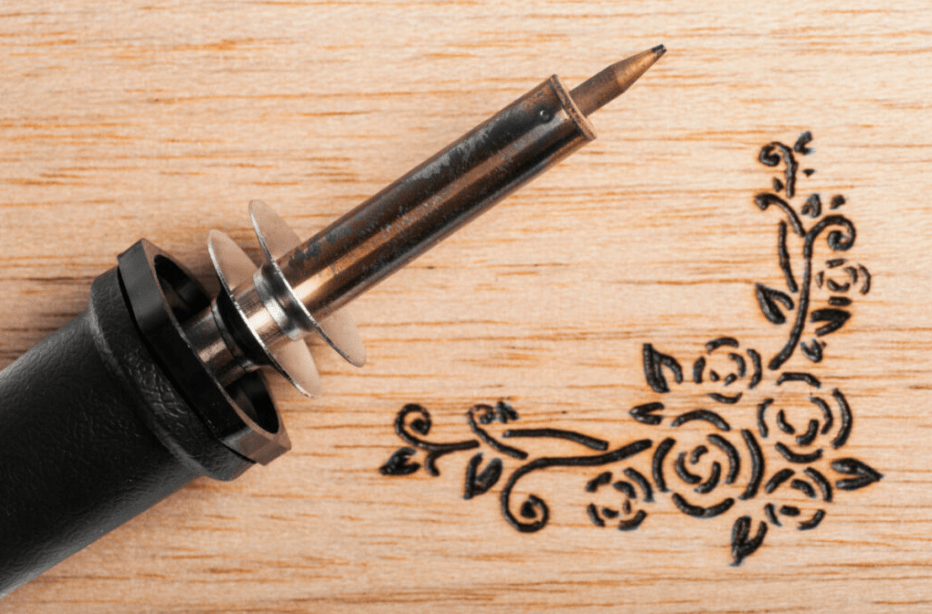
Wood burning is the art of using a heated tool to create designs on wood pieces. Its art can be simple or advanced, but is wood burning really as complex as it looks? Is wood burning a hard hobby to learn?
Wood burning, also known as pyrography, is not a hard activity to learn. The tools needed are easy and inexpensive to acquire and stencils can be purchased online to assist the artistic process. The best way to advance the skills needed in pyrography is to give it a try and get used to the tools.
Now that we understand that there is nothing to be afraid of in wood burning, how is it done? Continue reading to learn more about beginner tips and techniques for wood burning.
What Do I Need for Wood Burning?
Let me give you a quick answer for the tools needed, and then I will go more in-depth.
Tools Required
- Pieces of wood
- A prepped work area
- A heated tool
- Lots of time
Wood burning is relatively simple, right? All you really need is a lot of small bits of wood, an area away from things that could be melted or burned, and a working heated tool with accessories you like.
Art is never that simple, but wood burning can be if you take it slow. Here I have a few tips and tricks that can help you learn a bit more about wood burning.
Types of Materials
You can use any kind of wood for pyrography, but some of the best options include pine, aspen, birch, basswood, and poplar. This is because these types of wood are soft, have minimal grain, and are lighter in color, which will make the burn marks show up a little better than if you used dark wood. (Source)
We recommend basswood sheets because they are inexpensive and provide a large yet clean canvas for beginner wood burners. Prices range from 5 to 40 dollars, but we recommend buying a 12-pack like this one.
You can use other kinds of materials too! You can use leather, cork, paper, cotton, bark, canvas, bone, and antler. (Source)
A good idea when starting out with wood burning is not to have only one small section of wood to work with. Especially if you’re learning, it is near impossible to get it “perfect” on the first try. If that is the goal, you can print out a stencil online or purchase a book with images that fits the size of the material you are using by tracing the image.
We recommend looking into purchasing the Pyrography Workbook by Sue Walters. She explains how to transfer your drawings into your materials, necessities for the workspace, how to prepare wood, how to use color in your pieces, and ways to transfer your drawings onto materials other than wood.

Heated Tools
It can be hard to manipulate your heated tool on such a hard surface. Because of this, it is a good idea to invest in a tool that fits your art style and needs.
Prices for heated tools can range from 10 dollars to 400 dollars. With such a wide range, you have many options for starting this hobby. If you’re serious about pyrography, we recommend Amazon’s Burnmaster HAWK Single Port Woodburner package, although it is on the more expensive side.
It might be wise to purchase a wood burning pen that can switch tips, specifically wire-nib burners that allow you to replace the handle even when the tips are hot. This can be really helpful for the more complex art pieces. The more you practice, the more you get to learn your tools. It might be important to note that smaller wire gauge tips take longer to heat up. (Source)
Let’s look at the different kinds of accessories so that when you start your next project you know what you need!
Wire-Nib Tips
- Skew Tip: This tool is angled or slanted which allows the artist to use it for long lines or feathers.
- Spear Tip: This tool has a pointed edge and is helpful for getting into tight places or fine details on your art piece.
- Round Tip: This tool has a circular point which is great when you want only a little indentation on the wood or material.
- Chisel Tip: This tool is shaped like a box and is used for running quill lines.
- Ballpoint Tip: This tool has a tiny ball at the end which is good for calligraphy or writing motions.
Solid-Point Tips
- Universal/All-Purpose Tip: This tip is used for creating straight lines or outlines.
- Calligraphy Tip: This is a good option for curved lines or writing lines.
- Extra Fine Tip: This tool is used for details, straight lines, or light curves.
- Shading Tip: This tool is great for filling space or adding shadows.

Suggestions for Wood Burning
Now that you understand what you need to start wood burning, let me leave you with a final few tips.
First, know that softer wood burns faster, so you need to manage your time well when working with them. Tools that produce less heat are better used on softwoods such as basswood rather than hardwoods such as oak.
Next, use your heated tool in light and circular movements. Instead of putting a ton of pressure on your tool, using it lightly on a softwood will give you better results, especially when shading. Once you are sure of your shape, you can go back over and clarify your straight lines and outlines.
It is also suggested to sand your wood piece if it is not already smoothed out. You should also seal your wood so the stain will not bleed in nearby areas.
When you are using your heated tool, it is smart to go with the wood grain, especially if you are a beginner, because there will be less resistance and risk for burn injury.
Finally, understand that any mistakes made on your piece just add character to the piece! Nothing needs to be perfect, especially when wood burning is not forgiving of mistakes. It is all part of the art process!
 Isabelle Justice