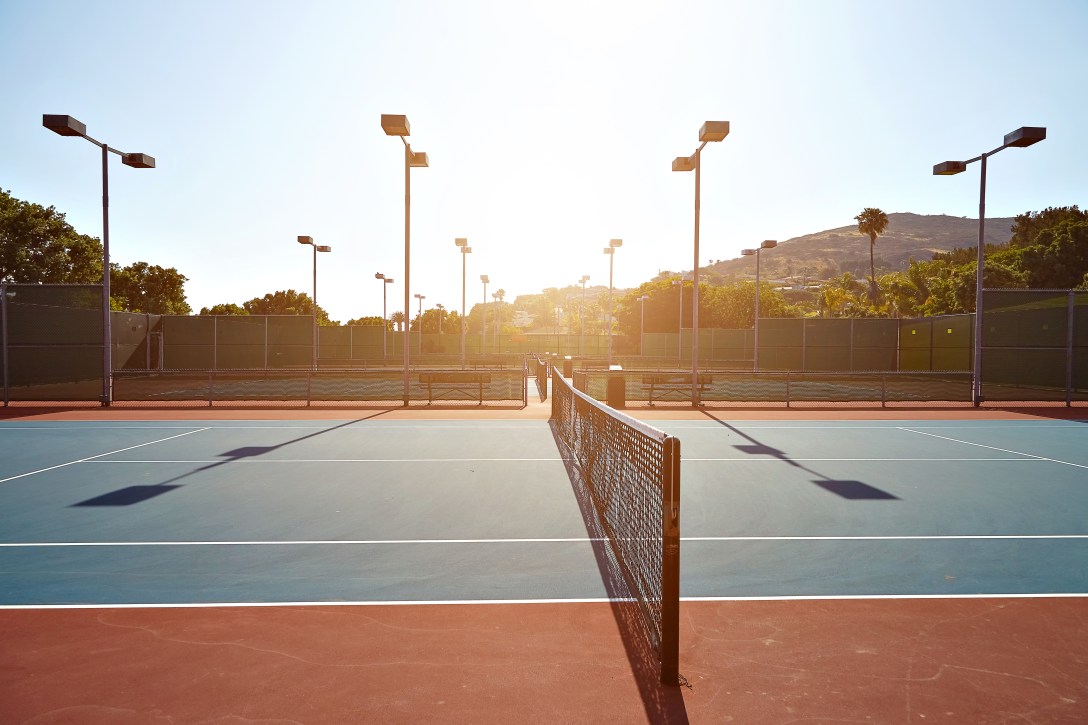
Although the pickleball community is growing, there are times when you don’t have someone to play with. Whether your pickleball friends are out of town or you are starting the sport on your own, this doesn’t need to get you down!
Like any other paddle sport, consistent practice with your equipment is the key to improving – even if you are the only person on the court.
Players can practice pickleball alone through solo drills. Solo drills are the technical and repeated exercises that give a player confidence and a deeper knowledge of their equipment. When a pickleball player practices alone consistently, their skills will improve when playing with a group.
In this quick guide, we’ll walk you through the best ways to practice pickleball alone. Next time you want to play the nation’s favorite paddle sport but don’t have the people to do it with, rest assured you can still improve your technique.
But first, why bother practicing alone? What makes solo drills work so well?
Why Practice Alone?
As mentioned before, pickleball solo drills are basic routines where players can practice proper form with their equipment. Practicing alone may seem redundant at first because pickleball is a social game. However, these kinds of drills are what sets professional pickleball players apart from beginners.
The passion of practice when no one else is looking is how you become an advanced player. This is what solo drills are all about.
Solo drills work well because they fire neurons. The more a pickleball player practices a drill, the quicker neurons will fire. When the drills are done correctly over a long period of time, a pickleball player’s skills will improve when working with a partner.
Keep in mind that it is not possible to play pickleball with one player. According to the official rules from USA Pickleball, pickleball is a social and friendly game. The purpose of this paddle sport is to connect with the players around you.
While practicing with others may be the rulebook’s ideal, solo drills are nothing to be ashamed of. Like we said, practicing when no one is looking is how you get better.
The bottom line is this: practicing alone helps you become a better pickleball player. To learn more about how neurons fire during drills, and 18 drills you can use to practice with a partner, check out our article here.
What Equipment Do I Need To Do Solo Drills?
Solo drills may require different kinds of equipment. For example, when improving a serve, a pickleball net may be required. Other drills require a pickleball machine. Most solo pickleball drills can be completed with a paddle, pickleball, and a wall. Not all drills require a pickleball court.
The ways you can practice pickleball alone vary, which is why we provided modifications with each solo drill. We will explain other ways to practice a certain area of the game if you don’t have access to a court.
How to Practice Pickleball Alone: 5 One-Person Drills For Beginners
Whether we convinced you to practice pickleball by yourself or you have no other choice, you’re in luck! Here at Paddletek, we put together five of the best solo drills to improve different techniques – all from the perspective of professional pickleball players.
The first solo drill we chose focuses on is great for overall technique. It helps you improve confidence with your paddle, hand-eye coordination, and overall feeling of being on the court. All drills below are great for beginners.
Solo Drill 1: Static Drop Feed
A static drop feed is dropping the ball in front of your feet, letting it bounce once, and hitting the ball in the center of your paddle.
Simple, right? It is once you get the hang of it! A Static Drop Feed is best for improving serves, rallies, and groundstrokes because it helps the player gain confidence that they can clear the net and continue a rally. A rally is a continuous play that occurs when the ball is served until a play ends. A groundstroke is when the player hits the ball after one bounce.
The Static Drop Feed improves hand strength and helps the player learn proper form. This solo drill gives the platform for players to practice different kinds of underhand serves.
In the end, a Static Drop Feed is a foolproof solo drill because it builds the basics for pickleball technique. This can be done anywhere, but this drill, like most of our solo drills, is best used on the court.
How to Perform Static Drop Feed
- Step 1: Drop the ball in front of your feet
- Step 2: Let the ball bounce once
- Step 3: As it bounces upward, hit the ball in the center of your paddle
- Step 4: Focus on technique and form, not passing the net
- Step 5: Pick up another ball, or walk to the opposite side of the court where your ball is and repeat
Modifications
For those that have multiple pickleballs, you can place them on the ground next to you before you begin the drill. If you have a pickleball machine, this is an appropriate solo drill to use that for. If you don’t have a pickleball machine and you don’t want to lay your pickleballs on the floor, a box can work.
If you have just one ball, players can complete a static drop feed and walk to the other side of the court to repeat the drill. If you don’t have a court, you can bounce the pickleball off a wall and try to complete a rally. If you don’t have a wall nearby, use the garage or side of a house. It is discouraged to complete a static drop on the driveway or near the road because the pickleball can easily roll away. Always have a wall or fence of some kind when doing this solo drill.
Pro Tips
- Swing low to high: After dropping the ball, swing your paddle low to the ground but without touching it. As the ball travels upward, the paddle needs to hit the ball mid-air. After making contact, let the paddle “follow through” and swing it high. This gives you a strong groundstroke.
- Keep strokes light and relaxed: Pickleball at its best is a lighthearted and sociable game. It’s best to play the game in the same manner. Keep your groundstrokes relaxed but intentional. Doing so will give you the correct power behind your groundstroke – not too weak, but not too aggressive.
- Hit across the court: Doing Static Drop Feed drills at a pickleball court is preferred. This is because players can practice hitting the ball diagonally, in the center, or directly across the court. Like mentioned before, this also gives players confidence that they can cross the net and aim the ball where they want it to go.
Solo Drill 2: Topspin Drive
The next solo drill we chose focuses on improving the strength of your serves. In other words, practicing a Topspin Drive will properly build your best aggressive shot in pickleball.
A Topspin Drive is getting the pickleball to dip low quickly after clearing the net. This forces the opponent to hit the ball lower, making it hard to continue the rally. Doing a topspin also helps a player serve deep. Serving deep means pushing the opponent behind the baseline.
To do a Topspin Drive, begin with a Static Drop Feed. However, keep the serve low to the ground but high enough to clear the net. You can do this by having a loose wrist and following through with your serve.
Having a loose wrist, or not gripping the paddle so tightly, allows the ball to stay low. This gives you a stronger momentum than the arm and elbow as you hit the ball. Following through with your serve means swinging low to high as mentioned earlier.
How to Perform Topspin Drive
- Step 1: Drop the ball in front of your feet
- Step 2: Let the ball bounce once
- Step 3: As it bounces upward, hit the ball in the center of your paddle with a loose wrist
- Step 4: Use just enough technique to let the ball pass over the net, but that it stays low to the ground after
- Step 5: Pick up another ball, or walk to the opposite side of the court where your ball is and repeat
Modifications
This solo drill requires a pickleball net and cannot be practiced on a wall. If you do not have access to a court, consider using a portable net. You can also practice Topspin Drives over a barrier of some kind, like a low couch or chair.
Remember, it is best to practice pickleball drills in an enclosed space to avoid hazards. Do not practice this in the driveway.
Pro Tips
- Keep the paddle at 90 degrees: When you hit the ball after it bounces once on the ground, hit it at a 90-degree angle. This allows your groundstroke to be stronger, and therefore more aggressive. A topspin can be completed with a simple underhand serve but altering your paddle to a 90-degree angle gives the player more control.
- Step into the serve: As you drop the ball and it contacts the ground, step into the serve. This gives the point of contact more momentum and gives you a stronger groundstroke. Begin the serve further behind the baseline to do this.
- Find your footing: Some players choose not to move their feet, but simply shift their weight as they do a Topspin Drive. This allows a player greater momentum and feeling of control. Others prefer to step further behind the baseline and do a simple two-step to give the Topspin Drive power.
Solo Drill 3: Rolling Shot
For a less technical solo drill, try the Rolling Shot. A Rolling Shot in pickleball is performing a ground stroke just before the non-volley zone. The non-volley zone is the box before the net.
This solo drill is great practice for rallies. In pickleball, once you get into the motion of consistently passing the ball back and forth, there may be times where you and your opponent are close to the net but away from the non-volley zone. Practicing the Rolling Shot teaches a player to have control when that close to the net.
Players can also practice their drives with the Rolling Shot. A drive is a shot that is straight ahead and low. It goes deep into the opposing backcourt. The goal is to push the opponent off the court.
How to Perform Two-Step
- Step 1: Drop the ball in front of your feet and before the non-volley zone
- Step 2: Let the ball bounce once
- Step 3: As it bounces upward, hit the ball in the center of your paddle with a loose wrist. Focus on performing a drive.
Modifications
This solo drill generally requires a pickleball court as it relies on the non-volley zone line. However, you can practice this solo drill with a portable pickleball net and complete a Rolling Shot approximately four feet behind the net. This represents the traditional non-volley area you find on the court.
Pro Tips
- Practice on opposite court sides: After completing a Rolling Shot, it’s encouraged to repeat the stroke on the opposite side of the court where the ball landed. This helps beginners become confident serving on both sides of the court.
- Serve aggressively: A Rolling Shot is your time to shine! At this point in the rally, the game is getting intense. Being this close to the net allows a player to more easily perform a drive than behind the baseline.
- Reduce steps: Many players find it easier to shift their weight between their feet rather than taking a step. Try both ways when practicing this solo drill.
Solo Drill 4: Serve
The arguably most important solo drill is the Serve and it is how every pickleball game starts. It is a vital part of the game, and the better your serve, more likely the better your game will be.
How to Perform a Serve
- Step 1: Stand at the right or left corner of the court
- Step 2: Drop the ball in front of your feet behind the baseline
- Step 3: As it bounces upward, hit the ball in the center of your paddle with a loose wrist
- Step 4: Focus on technique and strength to pass the net
- Step 5: Ensure the ball passes the net and hits the opposite corner of the court
- Step 6: Pick up another ball, or walk to the opposite side of the court where your ball is and repeat
Modifications
If you cannot be at a pickleball court, use a portable net for this. You can practice serving outdoors in a grassy area. Because a serve is such a long shot, it is not encouraged to practice serving indoors as it can damage the walls. If you cannot be outside and do not have a net, practice Static Drop Feed instead.
Pro Tips
- Serve hard: Being away from others gives the player room to practice hitting the ball hard without hurting anyone or stopping the game. Practicing a Serve alone is a safe space for the beginner pickler.
- Serve to the corners: Although there is no official game going, it is best to do solo drills like it’s the real deal! Serve to the corners of the court as if your opponent was physically here.
- Switch hand placement: As you Serve, try switching hands between right and left. Try Serving with one or two hands. Seeing what works for the player can help beginners Serve deep.
Solo Drill 5: Shadow Swing
A Shadow Swing is not as mysterious to do as it sounds. Simply, a shadow swing is swinging a pickleball paddle without hitting anything.
What’s the purpose of swinging a paddle if you have nothing to hit? It may seem silly, but it’s all for practice and comfort. The purpose of a shadow swing is to get confident with swinging a pickleball paddle and using proper form.
How to Perform Shadow Swing
- Step 1: Firmly grip the paddle with a loose wrist
- Step 2: Swing the paddle low to high
- Step 3: Repeat as needed
Modifications
This drill does not need to be done at a pickleball court. It may be helpful to do so to keep you familiar with the pickleball environment, but this solo drill can be done at any time.
Pro Tips
- Try different paddles: Sometimes, we don’t have our go-to paddle when playing a game. Doing a Shadow Swing with different makes of paddles can help you be confident in any situation. From cheap paddles to professional equipment like Paddletek, it’s good to be prepared.
- Use imagery: Some players find it helpful to practice the motion without any equipment at all! Imagining a successful serve while completing the proper motion is helpful for beginner picklers.
- Do this at home: Don’t wait to do this at the court! Shadow Swinging is a great way to practice proper technique away from other pickleball players. Best of all, this can be done in the driveway unlike other solo drills.
Practicing Alone Isn’t So Lonely After All
Pickleball is popular for a reason. It’s easy to learn and can be practiced with others or completely alone. Whether it’s the convenient Shadow Swings or technical Topspin Drives, there is plenty of benefit to practicing alone.
But when practicing alone, you don’t have a partner to rely on – it’s just you and your equipment. That’s why you need the right paddle that can get the job done. Check out our top-tier paddle inventory by clicking here.
 Isabelle Justice